Q. How do I keep the pink colour on my Hydrangea?
The Hydrangea species is native to Japan and now grown in many parts of the world.
Hydrangea macrophylla, commonly known as bigleaf Hydrangea, is the very popular type seen
in many colours throughout gardens large and small. The term macrophylla means ‘large or long
leaved’. H. macrophylla has two different types of flower head called lacecap and mophead that
have bloom colours influenced by the soil in which they grow.
(The word ‘hortensia’ is also used when identifying Hydrangea types and this is merely the
French and Spanish common name for the Hydrangea plant).
The bloom of the Hydrangea is not a true flower, but an inflorescence. Sepals, or modified
leaves, make up most of the bloom and surround the small, almost unnoticeable fertile floral
portions at the center.
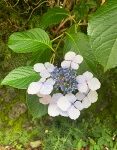
Lacecap Hydrangea blooms comprise a central area of small, fertile flowers surrounded by larger, pale infertile sepals that attract pollinators to the central area.
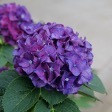
Mophead Hydrangea blooms have large, rounded, globe like flowers in shades of green, white, red, pink purple and many shades of blue and violet.
The colour is affected by soil pH. An acidic soil (pH below 7) will usually produce a flower
colour in the blue and purple range, whereas an alkaline soil (pH above 7) will produce flowers
in all shades of red through pale pink. Acidity and alkalinity are not the only factors that
influence the colour of the flower heads. It is also affected by the presence of aluminum ions in
the soil. Aluminum ions are mobile in acidic soil because of the ready availability of other ions
with which they can react. This allows them to be taken up via the roots into the hydrangea
bloom where they interact with the normally red pigments producing shades of blue, purple,
violet and mauve. In neutral to alkaline soils, the ions are immobile and combine with hydroxide
ions to form aluminum hydroxide which is not available to the plant. In the absence of aluminum
ions, the plant will tend to produce shades of pink.
Commercially available aluminum sulfate will influence blooms and keep them to the blue and
purple shades. However, to maintain shades of pink, horticultural lime (also known as
agricultural lime) should be added to the soil throughout the root zone and out as far as the drip
line. Dolomitic lime should only be used if the soil has been tested and found to be deficient in
magnesium. Aluminum sulfate and horticultural lime can be purchased at most nurseries and
garden centres. The effects are not instant. It can take a growing season or two before the effects
are seen. To maintain the pink blooms, a little horticultural lime should be added to the root zone
each fall which will allow the winter rain to dissolve it into the soil around the plant
Sources
https://en.wikipedia.org/wiki/Hydrangea_macrophylla
https://www.plantsrescue.com/posts/hydrangea-macrophylla (for illustrations only)
https://www.americanscientist.org/article/curious-chemistry-guides-hydrangea-colors
My own garden
Q. What is a Jostaberry and how is it grown?
The Jostaberry (Ribes × nidigrolaria) is a complex-cross fruit bush in the Ribes (currant) family. Three original species were used to develop the Jostaberry: the blackcurrant, Ribes nigrum; the North American coastal black gooseberry, Ribes divaricartum, and; the European gooseberry, Ribes uva-crispa.
The berry is similar to the ‘Jochelbeere’, Ribes × culverwellii, sometimes referred to as Black Negus, which is a cross of just two of these species, R. nigrum and R. uva-crispa. The canes are thornless.
The name ‘Jostaberry’ was created by combining the German words for blackcurrant and gooseberry, namely Johanisbeere (“Jo”) and Stachelbeere (“Sta”).
This German-bred berry was introduced in 1977, but recent breeding at USDA in Oregon has produced new varieties with better flavor and color. ‘Orus 8’ is said to be the best tasting, but it does produce a few thorns. ‘Red Josta’ has red highlights on a near-black berry; it is very productive and a little sweeter than a black currant.
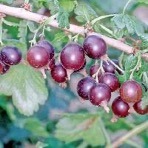
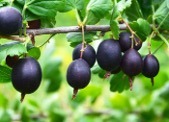
The fast-growing, long-lived bush can easily grow 6 feet tall. It can be grown in zones 3 through 8 and has good summer heat tolerance. The fruits hang on the bushes for 2 to 4 weeks without overripening, providing a long harvest window. The berries also freeze well and are easy to process. Unlike most other small fruits, which require full sun, Jostaberries thrive under full sun or partial shade.
Bushes flower in early spring and they may need protection from late-spring frosts. They bear fruit by the second year on year-old wood and the fruiting spurs of older wood. Berries start off green, closely resembling a small gooseberry, and hang firmly in clusters of three to five. In early summer, they reach their final size and develop a translucent deep purple, almost black skin. The vitamin C-packed fruits are ready to pick by late June in our climate.
Sources
https://en.wikipedia.org/wiki/Jostaberry
https://garden.org/learn/articles/view/678/Growing-and-Caring-for-Jostaberry/
https://agresearch.montana.edu/warc/documents_ADA_accessible/cold_hardy_fruits/Uof%20Ida
ho-%20growing%20currants%20gooseberries%20jostaberries.pdf
https://www.gardenersworld.com/how-to/grow-plants/jostaberry/ (For illustration only)