- In addition to Lavender, what are some “shrub size” plants for a dry, sandy slope?
- Can I grow Calendula as a perennial? I want to make calendula salve.
Q. In addition to Lavender, what are some “shrub size” plants for a dry, sandy slope?
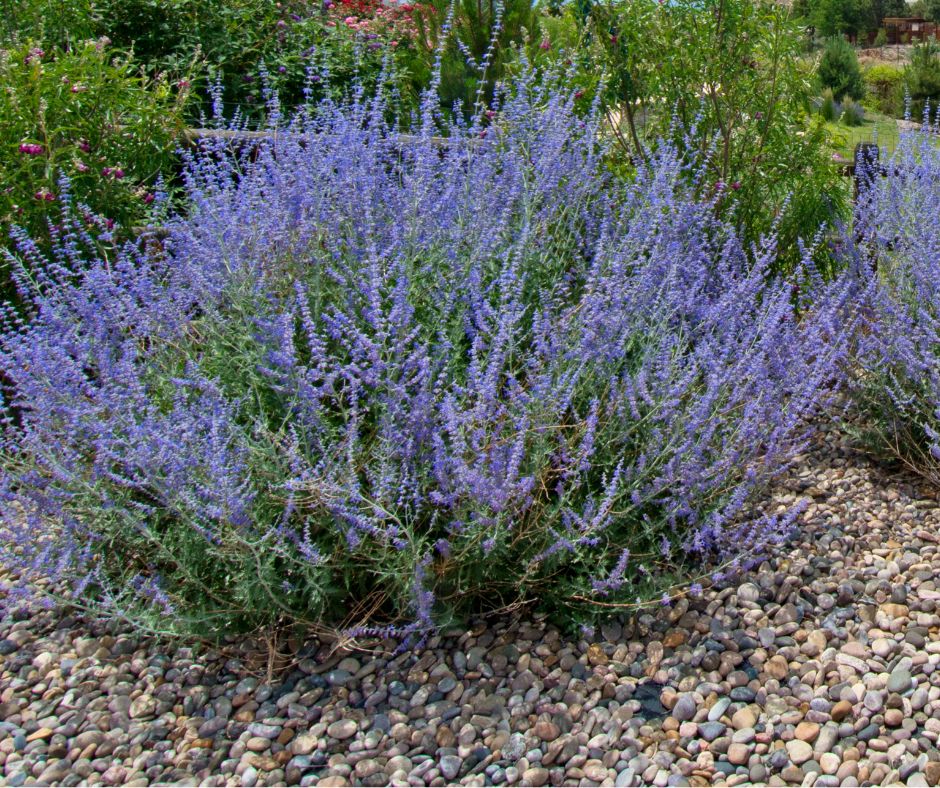
There are a number of other shrub-sized plants that will do well on a dry, sandy slope. All of the following choices would be best planted in the fall to help with root growth. In addition, they all will require supplemental water until established and during any excessive heat.
Jasmine nudiflorum (Common name Winter jasmine)
A lovely yellow, winter blooming vine shrub. It grows to 4 feet high but, if left to sprawl, can grow to 15 feet. I noticed it hanging over a rock wall and found it to be stunning when nothing else was blooming. I planted it on my dry, sandy steep slope 2 years ago (mine is part sun but you get more flowers in full sun) and it is now taking root wherever it has good soil contact. My soil is pretty lean so to encourage the growth, I amended the soil and have high hopes that this winter beauty will prevent erosion.
Perovskites atriplicifolia (common name Russian Sage)
This subshrub with a woody base grows in zones 4-9 to a height and width of 2 to 3 feet and is loved by pollinators. The top often dies back in colder climates but you can cut it to the ground (late fall or early spring) to aid new spring growth. This plant flowers for a long period of time over the summer and prefers full sun and well-drained conditions. It prefers lean soil with little to no fertilizer or they can flop.
Euphorbia characias subsp. Wulfenii
This plant grows in Zone 7-10 and likes good drainage (protect from winter rains with sharp soil) but appreciates a drink in the hot summer sun (not too much or it can be floppy). Grown in full sun to part shade, it can reach 2 to 3 feet tall and wide. Wear gloves when pruning flower stems back to base after flowering as sap is toxic and can be caustic to the skin.
Chrysothamnus-viscidiflorus (Common name yellow rabittbush)
This plant is native to western North America and thrives in dry, coarse to medium well-drained soil and tolerates salt. In zones 3-8, it grows 1 to 3 feet in height in full sun and disburses seeds in the wind. It bears bright, golden-yellow flowers from early summer to fall that attract pollinators and is considered desirable forage for wildlife. Cut back in fall to promote branching in spring.
Others plants to consider include Gold Tide™ dwarf forsythia (Forsythia ‘Courtasol’) or Cotoneaster. Ultimately to prevent soil erosion, having planting with varying root depth (shallow through deep) can help when the rain comes.
Sources
https://www.missouribotanicalgarden.org/PlantFinder/PlantFinderDetails.aspx?kempercode=a152
https://www.missouribotanicalgarden.org/PlantFinder/PlantFinderDetails.aspx?kempercode=e540
https://www.missouribotanicalgarden.org/PlantFinder/PlantFinderDetails.aspx?kempercode=d266
https://www.gardenia.net/plant/chrysothamnus-viscidiflorus
https://landscapeplants.oregonstate.edu/plants/chrysothamnus-viscidiflorus
Q. Can I grow Calendula as a perennial? I want to make calendula salve.
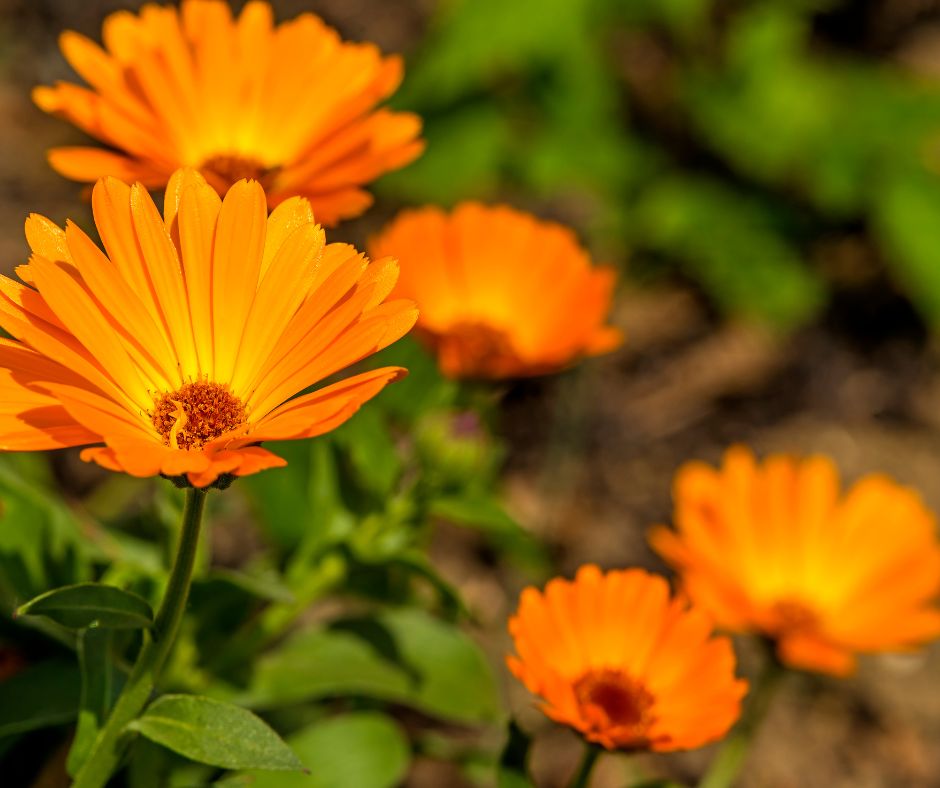
Calendula officinalis (common name pot marigold) is grown in our area (zone 8) as an annual but in zone zones 9-11 can be grown as a short-lived perennial but can reseed. It is easily grown in average, well-drained soil in full sun. It becomes leggy is grown in shady spots. It grows 1 to 2 feet in height and width. Flowers and leaves are edible. Calendula has been noted to have wound-healing and local anti-inflammatory properties. Calendula salve is simple to make and can be used as a gentle skin support for the whole family.
Sources
https://www.missouribotanicalgarden.org/PlantFinder/PlantFinderDetails.aspx?kempercode=a566
https://www.gardenia.net/guide/learn-how-to-grow-and-care-calendula