
- Q. How can I get rid of cyclamen that has grown into a shady area of my garden?
- Q. How can I protect my winter veggies from cold weather?
Q. How can I get rid of cyclamen that has grown into a shady area of my garden?
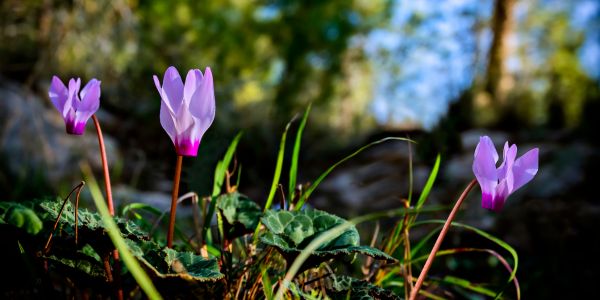
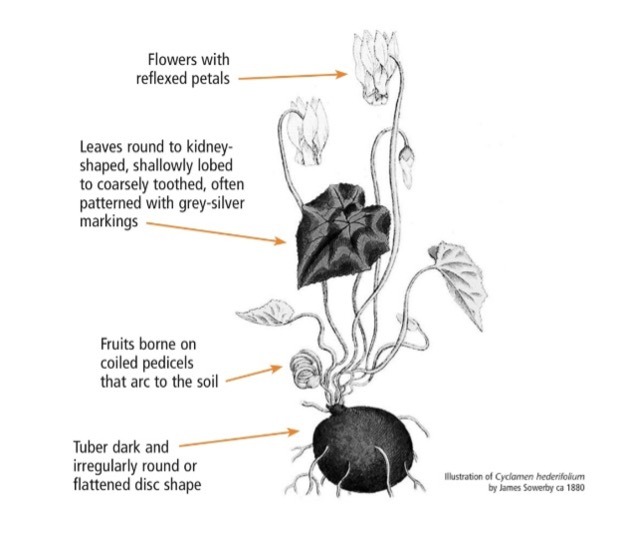
The cyclamen that has been taking over some areas of oak woodlands in Seattle and Eugene, Oregon as well as gardens in our area is cyclamen hederifolium. Other cyclamens include c. chum and c. parviflorum. The District of Saanich and Ontario Invasive Plant Council have listed c. hederifolium as an invasive species. Cyclamens included in our area are adapted to our mild wet winters and dry summers. The plant spreads from seeds and tubers to create dense mats over time. Ants find the seeds and carry them away to their nests where they eat the fatty layer surrounding the seed known as the elaiosome, leaving the seed to grow. Cyclamen are native to the Mediterranean area and grow easily in shade where there is not a lot of moisture in winter (under protective trees and shrubs). They tolerate a range of soil types and require good drainage. Patches of tubers appear to be expanding more rapidly than in the past. Some species flower in spring, some in fall and have distinctively patterned leaves with flowers being recurved, or swept back. They lie dormant in summer. Tubers can live more than 20 years. The seed capsule is held by a curvy stem above the tuber and when the seed is ripe it will fall off and lie just below the soil to begin growing. Cyclamen self sow freely and are pollinated by insects but can also self fertilize.
Hand digging when the soil is damp is the best way to remove the plants and make sure all of the tuber is dug up. Biological control for cyclamen is unavailable and herbicides should not be used. Flaming will kill the plant but not reliably kill the tuber and may be a fire hazard. Dispose of the plants properly.
Sources
https://stewardshipcentrebc.ca/PDF_docs/GOERT/Publications/Invasives_PDF/Cyclamen-species.pdf
Photo of illustration by James Sowerby in article ca 1880.
https://audreydriscoll.com/2022/03/ Friend to Enemy or Frenemy? Hardy Cyclamen. March 13, 2022
Q. How can I protect my winter veggies from cold temperatures?
In our balmy climate of 9a for most of Greater Victoria, we don’t have to worry about very cold temperatures.
However, they are not unknown. As recently as 2 years ago temperatures were in the extreme cold for a few days and plants suffered. Winter rains leach nutrients from the soil and when frozen nutrients can’t be absorbed by plants.
The easy way to help your vegetable bed from declining is to save in the fall all leaves and coniferous branches you can find. In November pile these onto your vegetable beds to 4”-6” high. This will protect summer planted for fall and winter harvested plants such as kale, onions, chard, carrots and purple sprouting broccoli. For even more protection you can cover the beds or rows of these crops with plastic tarp held down with rocks at the edges or a synthetic fabric row cover that lets light in and can provide a few degrees of warmth when temperature go down somewhat and warm up in the spring. For deeper temperature dips an unheated greenhouse is perfect
Remember to water plants occasionally. As temperatures dip to freezing water becomes unavailable for the plants. When soil is frozen frost heaves occur, where freezing lifts the soil and breaks the fragile roots of the vegetables. In these conditions the shoulders of root crops can freeze. When planting for fall and winter harvesting consider the location. Full sun is required and avoid planting in low lying areas at the base of a hill as this is where frost pockets occur. Also avoid planting in areas subject to wind. Other materials to use from the summer beds or to collect for mulching are straw, bracken from ferns, shredded corn stalks or any other material you can find such as dead leaves from ornamental grasses.
Sources
https://russellnursery.com/articles/protecting-your-winter-vegetable-garden/ Nov.18, 2012
Linda Gilkeson (2014). Backyard Bounty The Complete Guide to Year-Round Organic Gardening in the Pacific Northwest. p. 167-173.