
- Q. Why did my two-year-old Dogwood tree not flower last year? Do I need to fertilize it?
- Q. My 20-year-old blueberry bushes (10 of them), have stopped sending out new growth/canes and are therefore not producing many blueberries. Why is this?
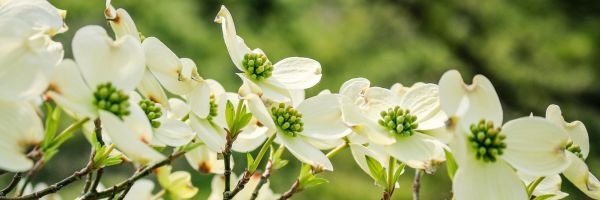
Q. Why did my two-year-old Dogwood tree not flower last year? Do I need to fertilize it?
It would make a difference if the tree is actually two-years-old, or if you acquired it two years
ago and the age is unknown. Dogwoods can take one to five years to start flowering, perhaps
even longer depending on your site conditions. Dogwoods require a good half-day of sun for
blooming, so a shady spot will decrease blooming. It’s not too late to relocate it to a sunnier
spot; move it in the fall if too shaded. Too much nitrogen in the soil will also negatively affect
blooming by encouraging vigorous leaf growth. In some cases, working superphosphate into the
soil around the roots is recommended, although our native Pacific Dogwood should do
perfectly well in unamended (acidic, nitrogen poor) soil. Winter freeze damage to buds could be
another factor. Have you pruned the tree at all? Pruning dogwoods should be kept to a
minimum, only to remove damaged, diseased, and dead wood; and possibly to train to a
desired shape very early on. Be sure to provide your tree a few inches of organic material as a
mulch (avoiding chips/leaves from cedar, eucalyptus, and black walnut), and remember to
water through the summer drought for a few years while it’s getting established. Good
horticultural practice, mixed with a bit of patience, is recommended.
Sources
10,000 Garden Questions (Dietz, 1982)
Pruning & Training (Brickell & Joyce, 2017)
The Ann Lovejoy Handbook of Northwest Gardening (Lovejoy, 2007)
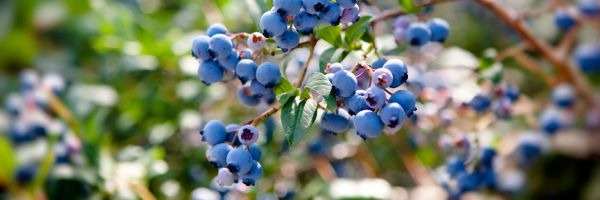
Q. My 20-year-old blueberry bushes (10 of them), have stopped sending out new growth/canes and are therefore not producing many blueberries. Why is this?
Blueberries fruit on wood that is one-to-four years old. Even though blueberry bushes can live
to 30 years or more, the plant can start to decline around year seven or eight if too congested
with old wood. It is important to renovate the shrub by removing one or two of the oldest
branches per year (or up to 1/3 of the shrub if fruiting has completely stopped). This is in
addition to maintenance pruning of branches that are crossing, damaged, diseased, or dead.
Prune in late winter when buds are visible. Blueberries prefer acidic soil (pH 4.5-5.5) so be sure
to regularly mulch with leaf mold, pine needles or bark mulch (avoiding chips/leaves from
cedar, eucalyptus, and black walnut). If pH remains high, treat with sulphur (aluminum
sulphate). If the above steps do not solve the problem, and growth continues to stagnate, it
might be that your variety is at the end of their lifespan and will need replacing.
Sources
Backyard Bounty (Gilkenson, 2020)
Pruning & Training (Brickell & Joyce, 2017)