
- What type of rose best tolerates some shade?
- What type of soil amendment would help with growing Blueberries?
Q. What type of rose best tolerates some shade?
While most roses require sun there are many varieties that will tolerate partial shade. This means
they will still need to receive at least 4 – 5 hours of sun per day to thrive. There are both shrub
and climbing varieties that will grow in semi-shaded areas.
The main consideration when planting roses in shady positions is to avoid areas where there are
overhanging branches and dry places where there would be too much competition from the roots
of trees and other shrubs. Good air circulation is very important to limit fungal diseases such as
black spot. All roses need rich, loamy soil that drains well and fertilization in the growing
season. Compost or well-rotted manure mixed into the soil and used as a top dressing helps
provide nutrition throughout the year.
Roses grown in shadier spots may not need watering quite as often as those grown in full sun. If
the soil around the rose feels damp, then withhold watering until the surface has dried out. Avoid
overhead watering as these conditions encourage fungal diseases. Below are some varieties to consider:
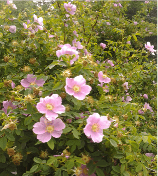
(Nootka Rose)
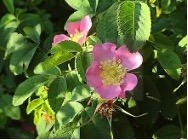
(Cluster or Swamp Rose)
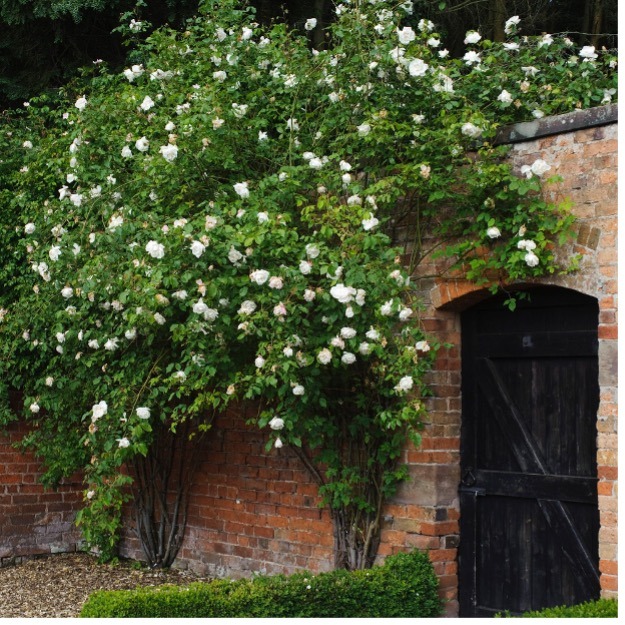
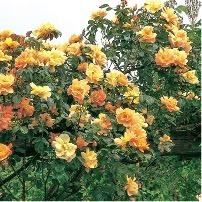
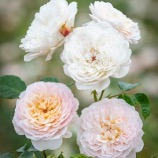

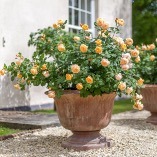
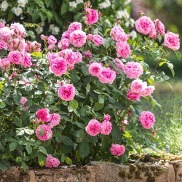
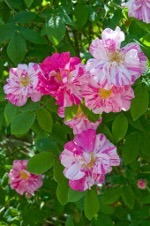
Click rose names below to read description
Native Roses
1. Nootka Rose (Rosa nutkana)
Our native Nootka Rose (Rosa nutkana) is a great option for PNW gardens, tolerating partial
shade and thriving in various conditions. It’s also a good source of food (rose hips and young
stems) for humans and provides both food and habitat for wildlife of all kinds. Whilst this is not
a showy or highly scented rose it more than make up for this in hardiness and disease resistance.
It has light green paired leaflets with toothed edges and sharp prickles at the base. The 5–8 cm
(2–3 in) flowers usually occur singly but may appear in groups of 2 or 3. They appear in early
summer, have a pleasant fragrance. This low maintenance rose spreads and can form an excellent
hedge.
2. Rosa pisocarpa (Cluster or Swamp Rose)
Rosa pisocarpa (Cluster or Swamp rose) is also a native rose. It thrives in damp areas and can
tolerate light shade. A very hardy rose that forms a broadleaf, deciduous shrub. It may form a
thicket and reach a height of 8 ft (2.5 m) if not pruned back. Stems are generally black,
sometimes dark red, with a few paired prickles at nodes. Leaves alternate and odd-pinnately
compound with 5-7 leaflets, each sharply pointed and single-toothed serrated. Flower clusters
carry 2-10 flowers, which are deep pink, smaller than the Nootka rose and about 1-2 cm across.
The fruit (rose hip) is about 1 cm wide and borne in clusters.
Climbers
Several climbing roses can be grown against a north facing or shady wall. Again, these roses still
require a few hours of sun each day. Some varieties are:
3. Rosa ‘Madam Alfred Carriere’
Rosa ‘Madam Alfred Carriere’, is a large, white, nearly thornless and fragrant rose that blooms
throughout the summer and fall.
4. Rosa ‘Maigold’
Rosa ‘Maigold’, is a thorny, copper yellow, fragrant rose with glossy green foliage. Blooms late
spring or early summer.
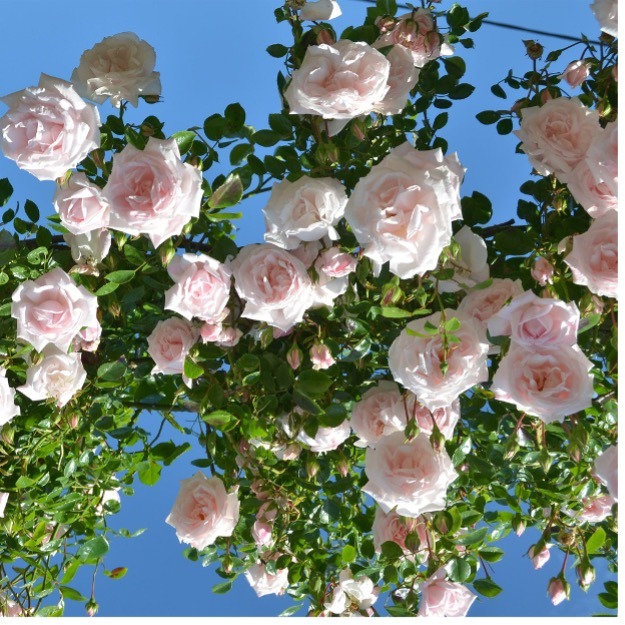
5. Rosa ‘New Dawn’
Rosa ‘New Dawn’ is a pink vigorous climber with dark green, glossy foliage. Blooms from early
summer to late fall. From experience in my own garden, this variety is a heavy bloomer which
can grow 20 feet in one season but seems to be rather prone to black spot.
6. Rosa ‘Madame Gregoire Staechelin’
Rosa ‘Madame Gregoire Staechelin’ is an exceptionally vigorous climbing rose with large, dark
green leaves. Fragrant, with fully double, pale pink blooms. Flowers early to midsummer.
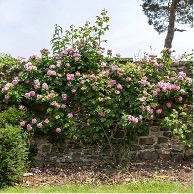
7. Rosa ‘Constance Spry’
Rosa ‘Constance Spry’, is a large climbing rose with thorny stems and grey green foliage.
Strongly scented double pink blooms are produced in mid-summer.
Shrub Roses
Quite a few shrub type roses will tolerate partial shade whilst still requiring at least four to five
hours of sun each day during the growing and blooming season.
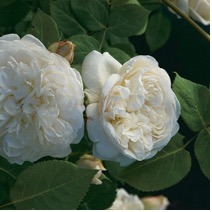
8. Rosa ‘Fair Bianca’
Rosa ‘Fair Bianca’ has densely petalled white blooms and a strong (spicy) scent. It is both cold
hardy and heat tolerant, blooming throughout the summer and early fall. This variety shows
resistance to common rose pests.
9. Rosa ‘Emily Bronte’
Rosa ‘Emily Bronte’ is a medium-sized shrub with large pink and apricot blooms fading to
cream. It flowers from spring time to early fall and has a strong perfume.
10. Rosa ‘Eustacia Vye’
Rosa ‘Eustacia Vye’ is pink with ruffled petals and is considered a medium sized shrub. This is a
hardy rose with a strong fragrance.
11. Rosa ‘Roald Dahl’
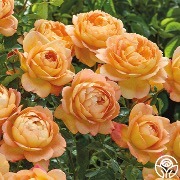
Rosa ‘Roald Dahl’ has deep orange buds which open to apricot-coloured blooms with a light
scent. It has very few thorns which makes it a good choice beside paths or walkways.
12. Rosa ‘Gertrude Jekyll’
Rosa ‘Gertrude Jekyll’ is a medium-sized shrub rose bearing bright pink double blooms from
spring to early fall. Strong fragrance.
13. Rosa gallica ‘Versicolor’
Rosa gallica ‘Versicolor’ is a compact, bushy rose with large, striped flowers in two shades of
pink. It has a strong fragrance and blooms from June to the end of August.
14. Rosa ‘Lady of Shalott’
Rosa ’Lady of Shalott’ blooms throughout the summer and has masses of orangey red blooms
with a light fragrance. This particular variety is considered resistant to many rose diseases and
can be grown as a shrub or a climber.
15. Rosa ‘Mister Lincoln’
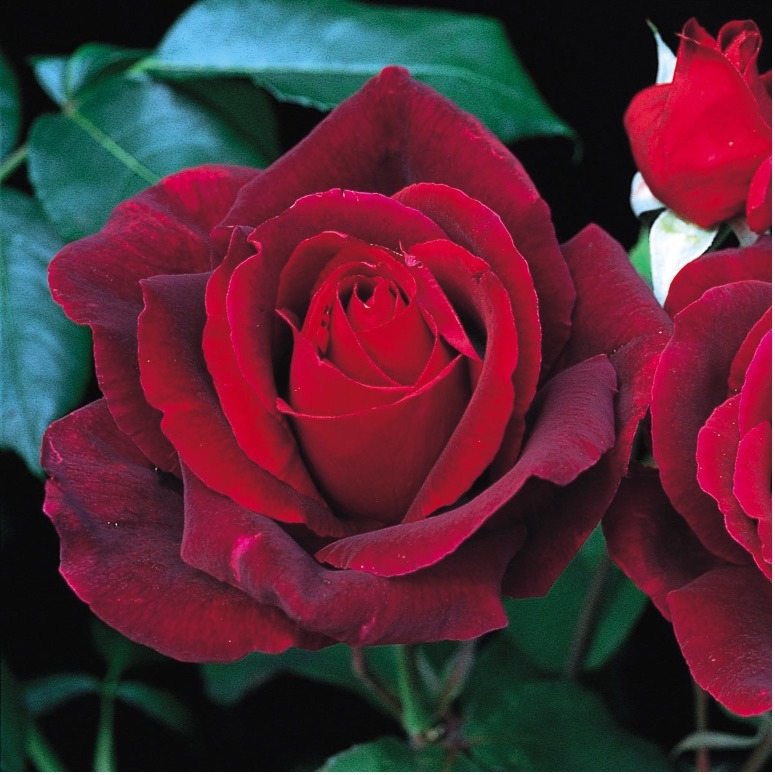
Rosa ‘Mister Lincoln’ is a hardy, disease resistant rose with large, dark crimson blooms and a
strong fragrance. When grown in shade the petals may appear even darker, almost black. Blooms
from spring to fall.
There are many more that will tolerate partial shade, and they come in many colours and scents.
New varieties are being bred each year, and your local nursery will be able to make further
recommendations.
As with all roses, deadheading spent blooms improves the look of the plant and encourages
further blooming. Both shrubs and climbers require pruning for shape and overall health of the
plant.
Sources
https://landscapeplants.oregonstate.edu/plants/rosa-pisocarpa
https://nativeplantspnw.com/nootka-rose-rosa-nutkana/
https://eu.davidaustinroses.com/collections/ideal-for-north-walls-and-shady-
areas?sort_by=manual&filter.p.m.custom.filter_location=Shady+Areas (For descriptions and
photos)
https://www.rhs.org.uk/plants/roses/climbing/shady-walls
https://www.rhs.org.uk/plants/97997/rosa-gallica-versicolor-(g)/details
https://heirloomroses.com/products/fair-bianca (For photo only)
Q. What type of soil amendment would help with growing Blueberries?
BC is one of the top three blueberry producing regions in the world. Ninety-nine per cent of BC
blueberries are grown in the Fraser Valley, Richmond, Pitt Meadows, Matsqui Prairie and Surrey.The reason blueberries grow well in the Pacific Northwest is because soils tend to be naturally
acidic. If you do not know the pH of the soil where you intend to grow a blueberry crop, a soil
test at a reputable lab will confirm the level of acidity in your area and whether there is a need
for amendments to provide the ideal growing conditions for blueberries.
Blueberry plants require acidic soil (pH 4.0 to 5.0) that is well-drained, loose and high in organic
matter. If necessary, add an acidic soil amendment such as sulfur or sphagnum peat to the soil to
lower the pH before planting. Sulfur is preferred, because the environmental consequences of
sphagnum peat harvesting are becoming an increasing concern.
It is best to amend the pH withsulfur the fall before planting, because it takes several months for sulfur to change the soil pH. Elemental sulfur is widely available in garden stores and may be sold as soil acidifier or as soil sulfur/sulphur. Coffee grounds are not always acidic and should not be relied upon as a pH
amendment for blueberries. Even if the coffee grounds you use happen to be acidic, a very large
amount would be needed to change the soil pH, and the results would not be reliable.
Consider raised beds or containers if your soil is not naturally acidic or well-draining.
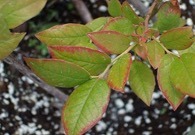
If you see light-green or red leaves in the summer or not much shoot growth on your blueberry
plants, it is likely that the soil pH is no longer in the optimum range of 4.0 to 5.0, or nitrogen is
needed. Choose an organic acid fertilizer, such as one recommended for azaleas and
rhododendrons. Continue to have your soil pH tested every year or two and amend as needed.
Signs of iron chlorosis caused by high soil pH.
Throughout the life of the plants, maintain a few inches of wood mulch, oak leaves or pine
needles to help maintain soil acidity around them. Blueberries have very shallow roots and can
be affected by high or low soil temperatures. A mulch also keeps the soil moist and controls
weeds.
When buying blueberry plants, most nurseries ship bare root plants at the appropriate time for
planting in early spring. Keep dormant plants in a dark, cool, moist place until you’re ready to
plant. Make sure the roots stay moist but not saturated, and plant as soon as possible. Soak roots
in a bucket of water for a couple of hours before planting.
If buying plants locally, find potted plants that are at least two or three years old because
blueberries produce very little fruit in their first two to three years of growth. Blueberry plants
grow slowly and reach full size in 8 to 10 years. Keep the potted plants well-watered in a sunny
location until ready to transplant.
Blueberries need regular water and full sun and will not thrive in shaded areas.
Plant young blueberry bushes three to four feet apart in late April or early May and if possible,
plant two or more varieties for successful pollination. Incorporate plenty of organic matter into
the planting hole. Each winter, prune out old, weak and dead wood.
Birds are a major challenge during the harvesting period. They can eat a lot of the crop. Covering
the bushes with fruit netting sold at nurseries and hardware stores can prevent the problem. In the
late fall and winter, rabbits and deer will nibble on the stems of blueberry bushes. This may
drastically stunt the plant. Protect plants by surrounding them with chicken wire or similar
fencing in the fall and winter.
Different blueberry varieties offer options for flavour, sweetness, and time of fruiting. Varieties
that bloom at the same time aid in pollination of each other. Here are a few popular varieties of
high bush blueberries for the PNW:
- Vaccinium corybosum ‘Duke’. An early variety. This heavy-producing bush is upright, stocky and open. Blooms late, produces early and consistently. Excellent for freezing.
- Vaccinium corymbosum ‘Bluecrop’. Mid-season variety. The bush is vigorous and may even tend
to over-produce if not carefully pruned. The fruit is large, light blue and firm. - Vaccinium corymbosum ‘Reka’. Early season, vigorous and adapts well to a wide range of Northern climates. Early-ripening, medium-sized berries.
- Vaccinium corymbosum ‘Patriot’. Mid-late season, self-fertile but a better crop usually occurs if another variety is grown nearby.
For containers (preferably at least 24 inches deep and 24-30 inches wide, such as a half wine barrel) or smaller garden spaces, compact ‘half high’ varieties provide early harvests and have shown good disease resistance. Container grown blueberries may need the pot to be shaded from afternoon sun to prevent the soil from drying out. It’s important to keep the container evenlymoist but good drainage and acidic soil are just as important as with their garden grown counterparts. Here are a few suggestions for varieties that grow well in containers:
- Vaccinum corybosum ‘Top Hat’. Mid-season, small ‘sweet tart’ berries.
- Vaccinium corybosum ‘Perpetua Bushel’. Two crops per season, one in the summer and a second in the fall.
- Vaccinium corybosum ‘Sunshine Blue’. Mid-season, sweet berries.
Sources
https://www.bcblueberry.com/consumer/blueberries-101
https://extension.umn.edu/fruit/growing-blueberries-home-garden
My own garden