
by Heidi Reiter
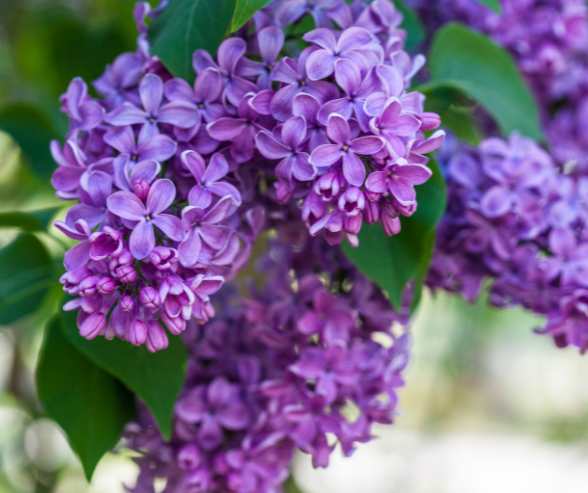
With the right care and selection, Lilacs (Syringa vulgaris) can thrive in the Pacific Northwest and reward gardeners with decades of fragrant blooms.
Whether planted as hedge, a focal point, or part of mixed border, these classic shrubs bring timeless beauty and a sense of springtime nostalgia to any garden. To cultivate and maintain healthy lilac blooms in this region consider the following guidelines:
Planting
Site Selection: Lilacs thrive in full sun, requiring at least six hours of direct sunlight daily for optimal blooming. Ensure the chosen location offers ample space, as some varieties can grow 5 to 15 feet wide.
Soil requirements: These shrubs prefer fertile, humus-rich, well-drained soil with a neutral to slightly alkaline pH near 7.0. To improve poor soil conditions, incorporate compost to enhance fertility and drainage.
Planting: The ideal times to plant lilacs are in the fall before the ground freezes or in the early spring after the ground thaws. This timing allows the roots to establish before the growing season. Dig a large hole two to three times as wide as the root-ball with the top of the root-ball level with surface of the hole. If planting a bare root, the top layer of roots should sit a few inches below the surface. Fill in with soil and water thoroughly to stabilize the plant and guard against air pockets.
Care & Maintenance
Watering: Once established, lilacs are relatively-drought tolerant. Watering during dry spells, aim for about 1 inch of water per week. Overwatering can hinder blooming.
Fertilizing: Apply a balanced fertilizer such as 10-10-10, sparingly in late winter. Excessive fertilization can reduce flowering.
Pruning
Prune lilacs immediately after they finish blooming in late spring. This practice prevents the removal of next year’s flower buds, which begin forming in the summer. To maintain the size and encourage vigorous growth, remove about one-third of the oldest branches down to the ground. This rejuvenation process can be spread over several years for overgrown shrubs.
Additionally, deadhead spent flowers to promote better blooming the following year.
Pests & Diseases
While lilacs are generally hardy, they can still be affected by several pests and diseases due to the damp conditions common to the Pacific Northwest.
1. Powdery Mildew
- Symptoms: white, powdery coating on leaves, often found in late summer
- Management: Improve air circulation by thinning branches, water at the base, and select disease resistant cultivars e.g., Syringa pubescens ‘Miss Kim’
2. Bacterial Blight (Pseudomonas syringae)
- Symptoms: Blackened shoot tips, wilting, black flower buds
- Management: Prune infected parts, sanitize tools, and avoid overhead watering
3. Lilac Borers
- Symptoms: Wilting, sawdust at the base of stems
- Management: Prune out infected stems, and apply beneficial nematodes in late spring
4. Scale Insects
- Symptoms: Sticky residue (honeydew) small bumps on stems
- Management: Remove manually or treat with horticultural oil during dormancy
5. Aphids
- Symptoms: Curled leaves, sticky honeydew
- Management: Hand pick aphids or wash them off with a strong jet of water Consider companion planting to attract beneficial insects such as ladybugs as a natural pest deterrent.
Propagation
1. Suckers (best for heirloom varieties)
- Wait until early spring or fall.
- Identify a sucker at least 6-8 inches tall and a few inches away from the main plant.
- Dig down to expose the root connecting it to the parent.
- Cut the sucker away with a sharp, sterile knife or pruners.
- Replant in a prepared hole and water well.
2. Softwood Cuttings (early summer)
- Take 4-6 inch cutting from soft, new growth (not woody stems) in early summer.
- Strip lower leaves and dip cut end in rooting hormone.
- Insert into a sterile, moist medium.
- Cover with a humidity dome or indirect light.
- Keep moist and wait 4-6 weeks to roots to develop.
3. Hardwood Cuttings (late fall/winter)
- Take 8-12 inch cuttings from mature, leafless stems in late fall.
- Insert into moist sand or potting mix outdoors or in a cold frame.
- Leave over winter; roots may develop by spring.
4. Layering (spring or early fall)
- Choose a healthy, flexible branch closer to the ground.
- Wound the underside and pin it down with a U-shaped wire.
- Cover with soil, leaving the tip exposed.
- Water occasionally.
Varieties
| Name | Flower | Fragrance | Height x Width | Comment |
| Syringa vulgaris ‘President Lincoln’ | Single, pale skyblue | Strong and sweet | 10-12’ x 6-8’ | One of the truest blue-toned lilacs. Fast grower |
| Syringa x hyacinthiflora ‘Pocahontas’ | Single, rich deep reddish-purple fades to softer purple as blooms mature | Strong and sweet | 8-10’ x 6-8’ | Early blooming, powdery mildew resistant |
| Syringa pubescens subsp. patula ‘Miss Kim’ | Single, pale lavender deepening to pinkish lavender as it ages | Spicy sweet | 5-6’ ft x 5-6’ | Compact, foliage turns burgundy in fall, powdery mildew resistant |
| Syringa ‘Bloomerang’ Dwarf Purple | Single, lavender | Light and sweet | 3’ x 3’ | Compact size ideal for containers or small spaces, reblooms again in summer and fall, disease resistant |
Fun Facts
- Lilacs belong to the Oleaceae family which also includes olives, jasmine, and forsythia.
- The botanical name of lilac, Syringa (suh-RIN-gah), is from the Greek word syrinx, which means tube. Stems of lilac contain a spongy pith which can be remove, leaving a hollow tube that has traditionally been used to create pan-pipes.
- Their name has Persian roots, the word “lilac” comes the Persian word lilak meaning “bluish”. Lilacs are native to Balkan Peninsula and were introduced to Western Europe through Ottoman gardens.
- Blooms are edible and can be used for drinks, combined with sugar, water and lemon for a syrup or cordial.
- Lilac fragrance is composed of over 200 different compounds, making it difficult to replicate synthetically.
References
https://extension.oregonstate.edu/news/prune-lilacs-soon-after-bloom
https://extension.oregonstate.edu/news/how-recognize-treat-avoid-lilac-bacterial-blight
https://www.rhs.org.uk/plants/99011/syringa-vulgaris/details
https://gardening.usask.ca/articles-and-lists/articles-plant-descriptions/trees/lilacs.php
https://www.almanac.com/comment/63567
Floret Flower Farm. https://www.youtube.com/watch?v=Pqm2iMDmsUg
Naomi Slade. 2022. Lilacs. United Kingdom: Pavillion
Martha Stewart. 2018. Martha’s Flowers. United States: Clarkson Potter
Christopher Brickell, David Joyce. 2017. Pruning and Training Revised. United States: DK