Q. How do I deal with aphids on my roses?
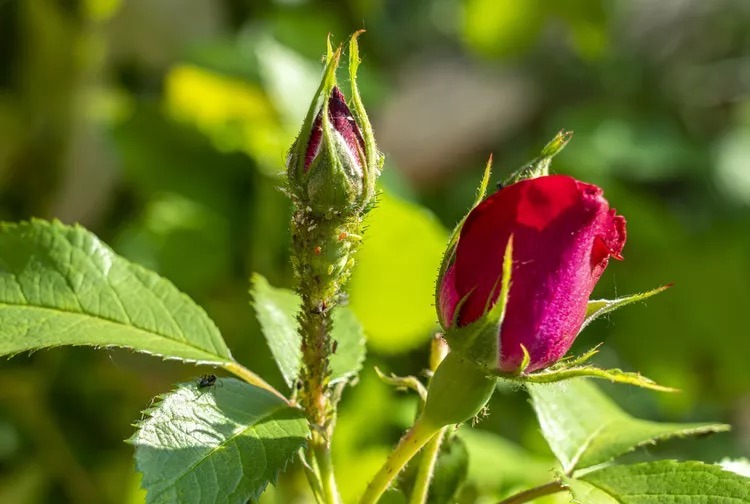
Aphids are small, soft-bodied, rounded insects which may be black, pink, or pale green. They cluster on new growth on the underside of leaves, sucking plant sap causing wilted, discoloured, and stunted leaves.
Aphids feed on the surface of leaves and are not enclosed or protected by the plant parts so are relatively easy to reach with various control measures:
Remove and destroy insect-infested leaves by plucking leaves with the heaviest infestations of aphids. Do not compost or contribute to a municipal green waste collection program, but destroy the leaves after removal. Although this may make some people squeamish, picking aphids off by hand is a good way to help remove the aphid population and reduce damage.
Gently blast aphids with water spray so you wash the eggs and nymphs to the ground where they will die. Alternately, spray with insecticidal soap, horticultural oil, or pyrethrin which is a natural insecticide extracted from the dried flowers of the Chrysanthemum plant. All products are available at garden centres. Avoid using a spray of vinegar whose acidity can burn the foliage on roses. Hose down your plants about once a week to keep these aphid populations at a low level. Although this appears to contradict the advice to keep foliage dry, it does not if you do this on clear days in the morning so that leaves have time to dry.
As aphids thrive on succulent growth, don’t overfertilize your roses.
As well, companion planting of Allium plants with showy globe-shaped flowers or edible
varieties of Allium like chives and onions will assist in reducing the aphid population as will marigold companions.
Always clean up and dispose of fallen rose debris at the end of the season as aphids can overwinter in the plant debris.
Sources
West Coast Gardening Natural insect, Weed & Disease Control, Linda Gilkeson, 2013, p. 49-50.
https://www.thespruce.com/aphids-on-roses-8609329
Q. What are mushroom blocks? I just picked up a free one.
These mushroom growing kits or ‘blocks’ as you call them, have taken the edible gardeningworld by storm. There are many different varieties of mushroom you can grow, and the kits aresold on-line, in garden centres, grocery stores, at craft fairs, etc.
Mushroom grow kits are theeasiest way to grow mushrooms at home. Some, like Lion’s Mane kits, arrive ready-to-fruit – just cut, mist daily, and harvest in under two weeks. Others, like Oyster mushroom kits, come with the spawn and substrate separately, so you’ll mix them yourself when the kit arrives. Both Lion’s Mane and Oyster mushrooms are considered easy-to-grow species, so perfect for beginners, small spaces, and quick harvests. Instructions for growing are always included in the kits.
Mushroom grow kits work best in indirect light at room temperature. Just keep them out of direct sunlight, which can cause drying. Most kits produce 2 to 3 harvests. If you continue to keep misting and caring for your kit as normal, a second flush should pop up.
When finished growing, the mushroom kit can be composted.
It is best to purchase these kits from a reliable, well known organic grower and to check the ‘best by’ date on the kits. A mushroom grow kit is not useable when there are clear signs of contamination on the mushrooms, like green, black, or orange discolouration, or a sour smell. Healthy mushroom growing kits have a fresh, earthy smell and a bright colour. If you think your kit is contaminated, it’s best to replace it. To avoid contamination, keep your kit somewhere cool, clean, and airy.
Sources:
Sources
https://www.youtube.com/watch?v=6Pa0QnYJzrU
https://www.goodhousekeeping.com/home-products/g39188994/best-mushroom-growing-kits