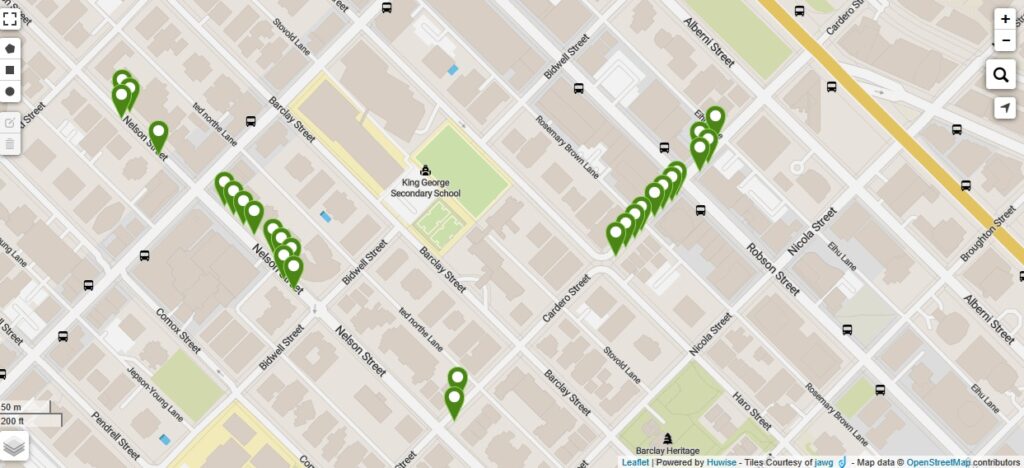
These maps show where some of the 425 Catalpa bignonioides trees have been planted as boulevard trees in Vancouver. Each green icon shows where a tree is. This map can be generated at https://opendata.vancouver.ca/explore/dataset/public-trees/map. Then you zoom in on the area that interests you.
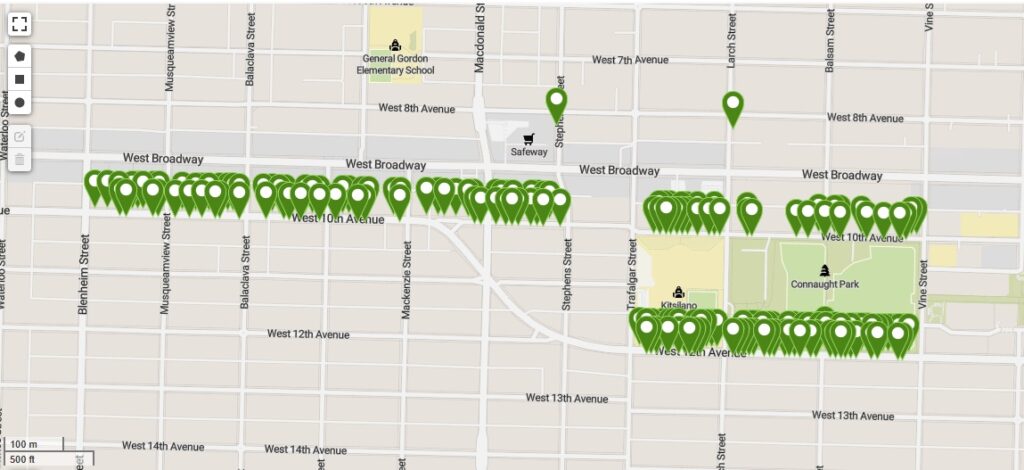
There are many along West 10th Avenue on both sides of the road between Blenheim Street and Stephens Street, and many more on the streets surrounding Connaught Park and the neighbouring Kitsilano Secondary School.
Are there any near you?
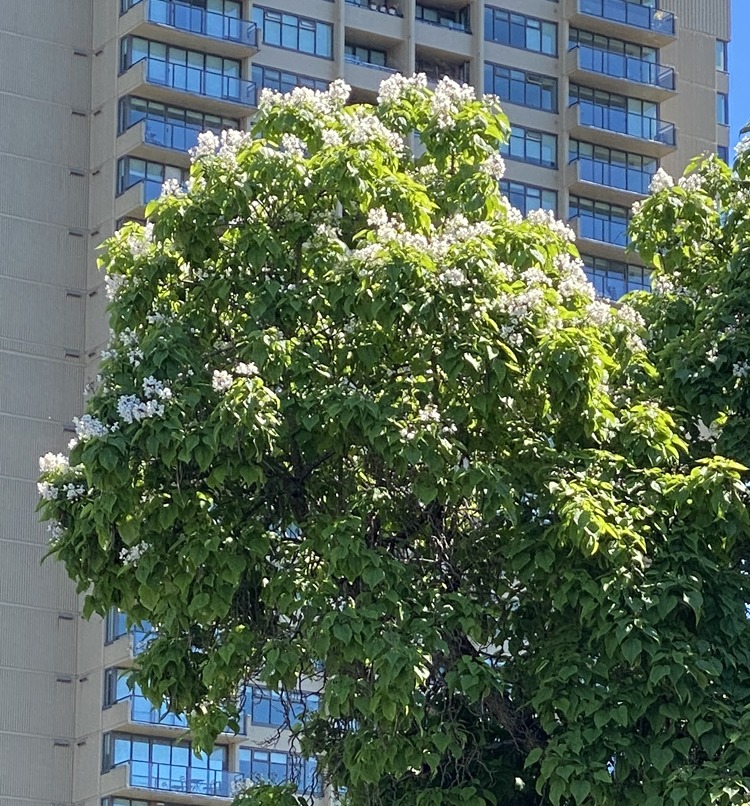
The common names for C. bignonioides is common catalpa, southern catalpa, or eastern catalpa. It is native to the US states of Texas, Louisiana, Mississippi, Alabama, Georgia, and Florida. It is a huge tree with large simple leaves that are somewhat heart shaped and it grows very showy inflorescences of white flowers with markings for pollinators. Once pollinated, each flower becomes a long bean holding very many winged seeds.
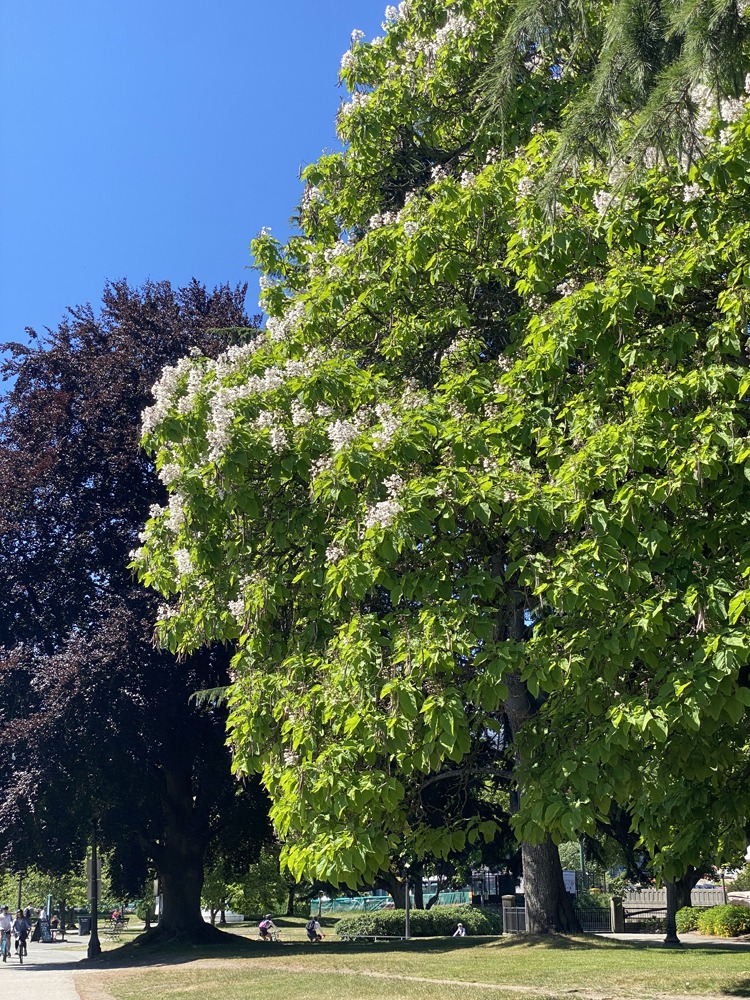
This year of 2026, the flowers bloomed early, in June rather than their usual July. But then Vancouver’s 2025-2026 winter was mild and warm, with very little snow to slow things down.
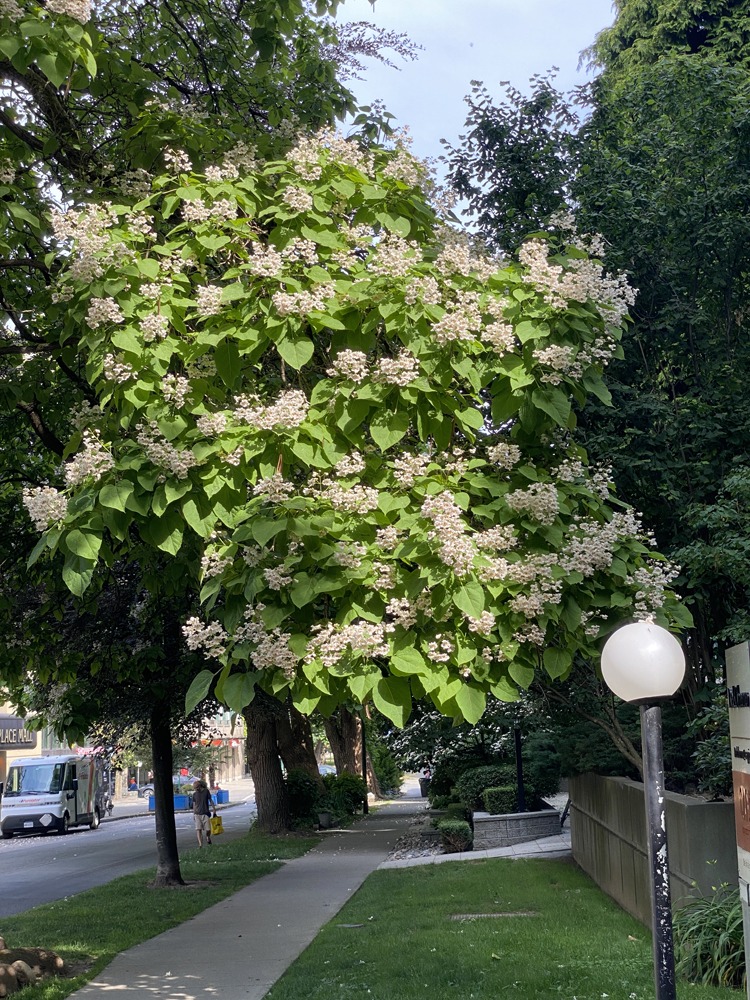
This is just one low-hanging branch!My fascination with this species is because a number of these trees have been planted on my street and so I watch it every season.
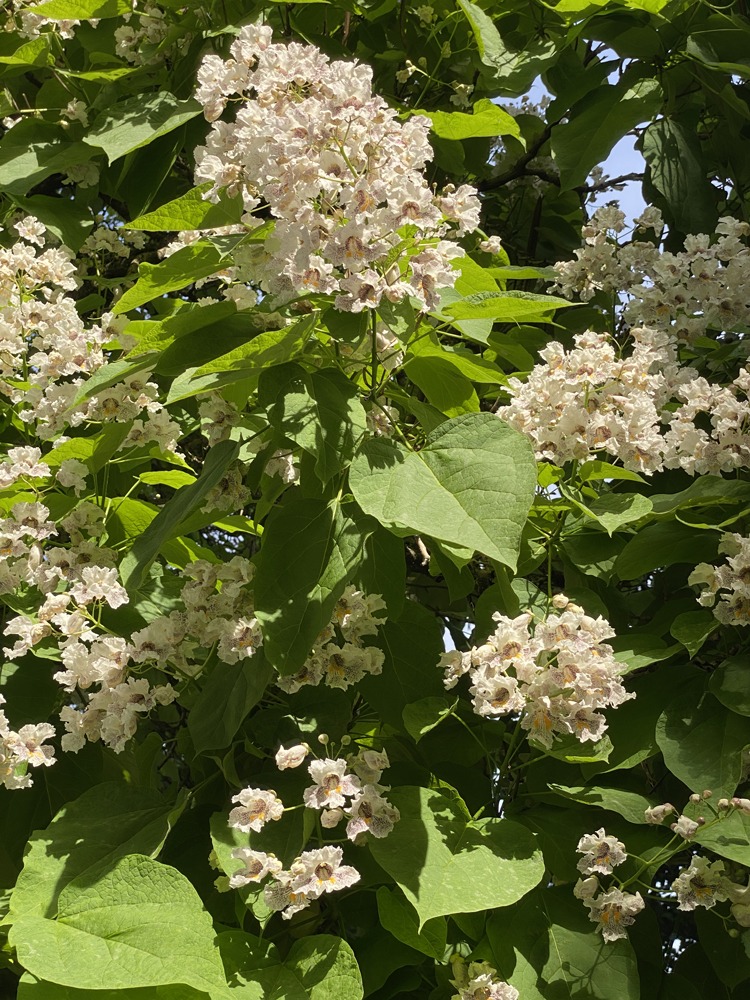
Notice the heart-shaped leaves, their bright green colour, their pointed tips. The blossoms are frilly with purple and orange markings. They smell good too.
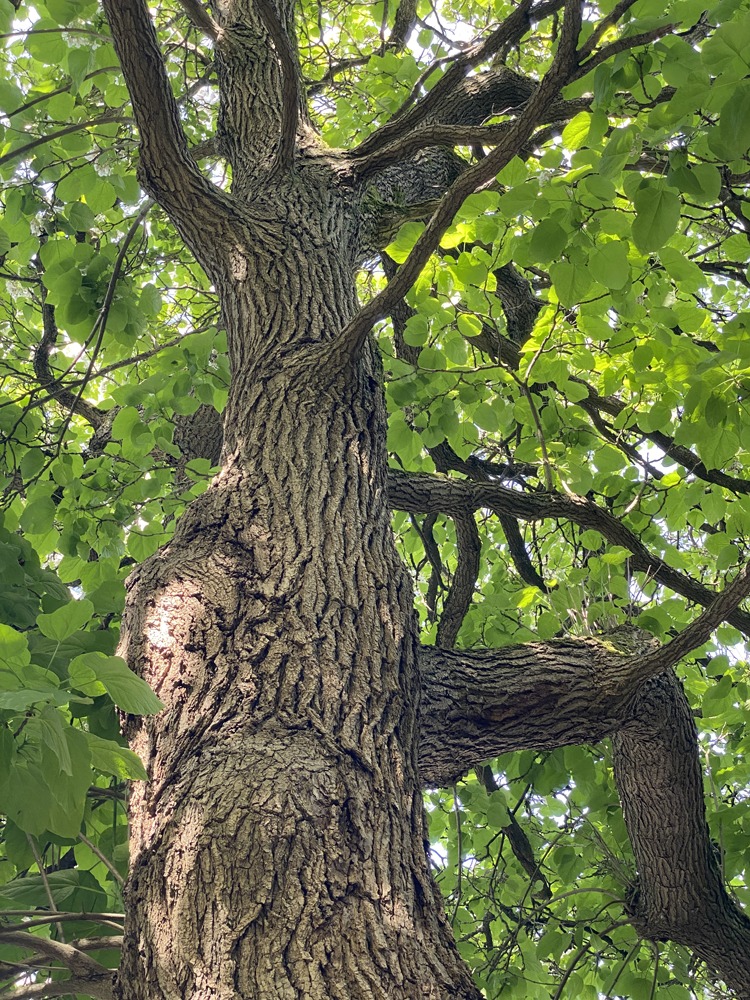
In addition to the gorgeous blossoms, the rugged vertical bark on the trunk with its deep furrows, the tree’s branch scars (where it has self-pruned), and the random angles at which branches emerge from the main trunk all help me with recognizing a catalpa tree. In the south, where it is native, the tree is grown for the catawba grubs–plump catalpa worms–that eat the leaves; these grubs make great fishing bait. Luckily, these larvae of the catalpa sphinx moth (Ceratomia catalpae) have not been found on our trees.
🖊️&📷 🌱VMG Nina S.