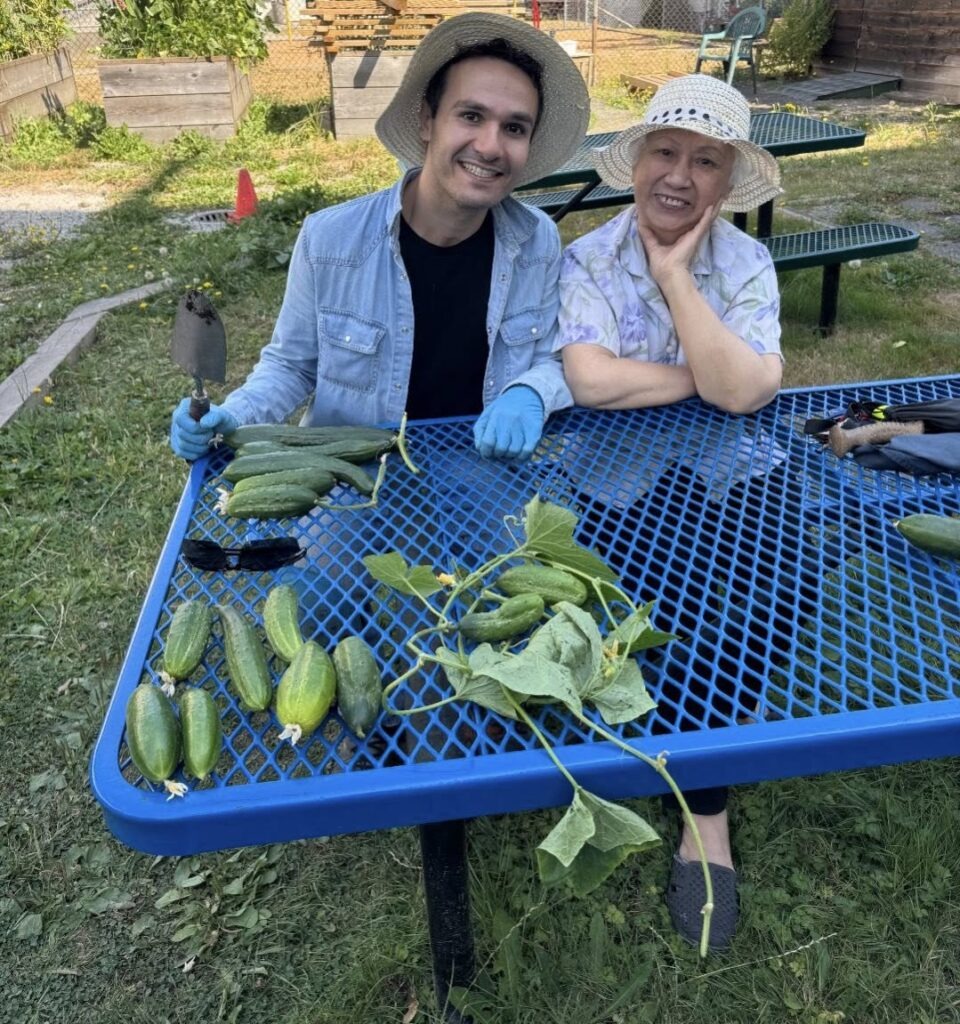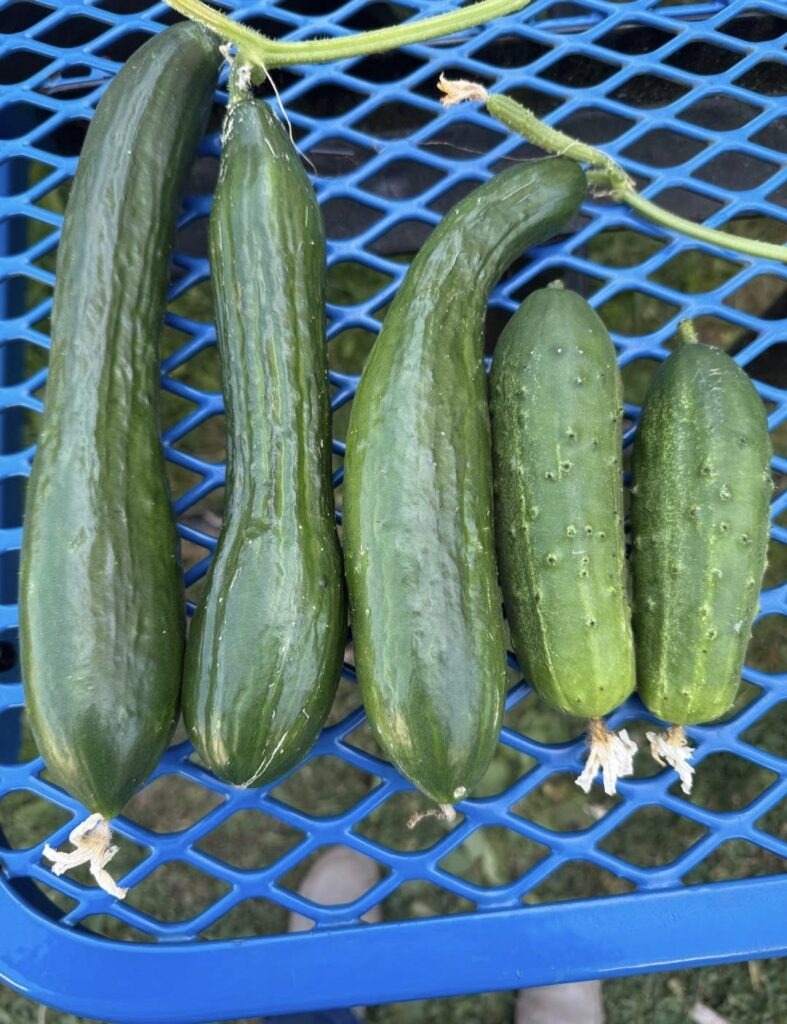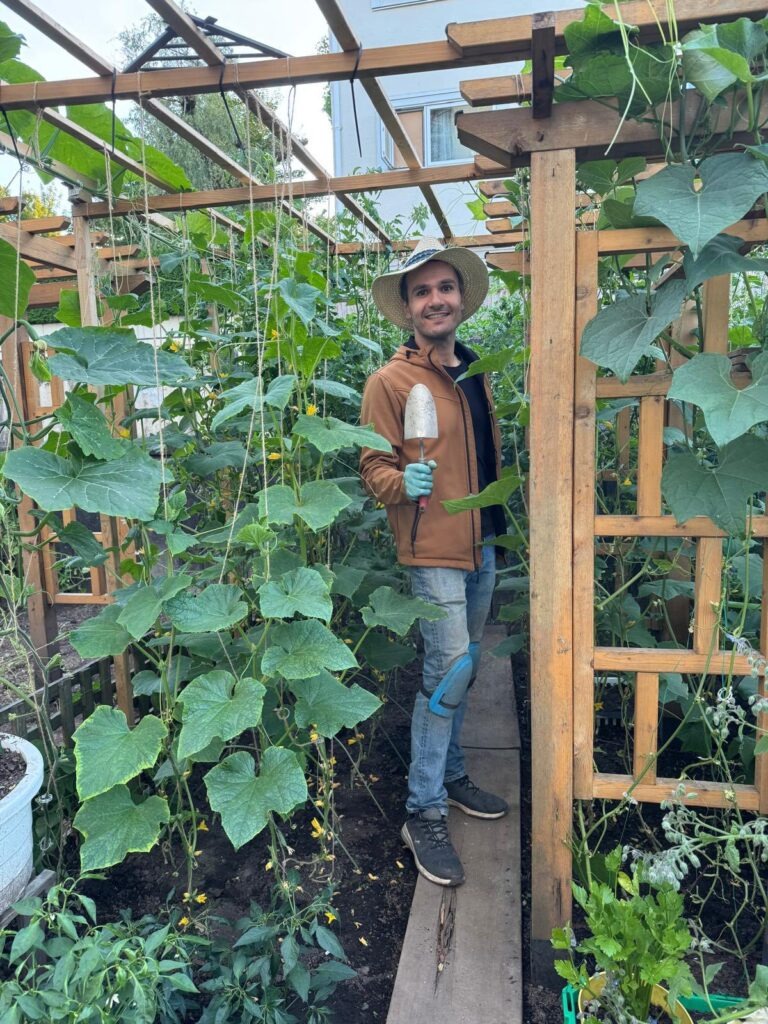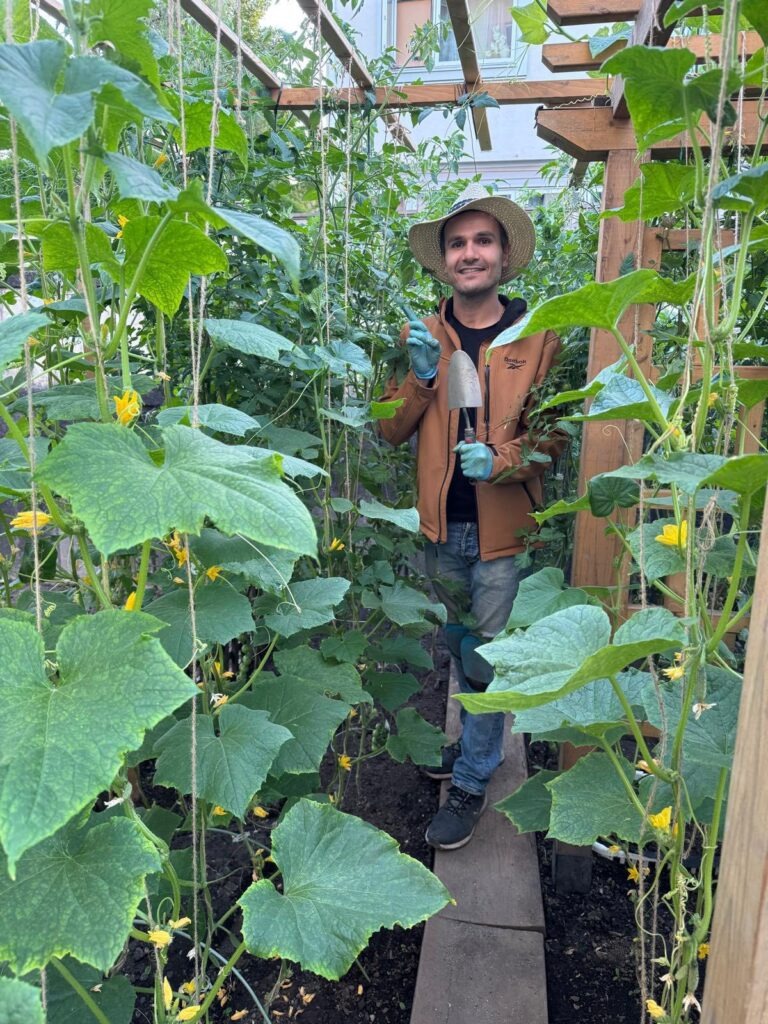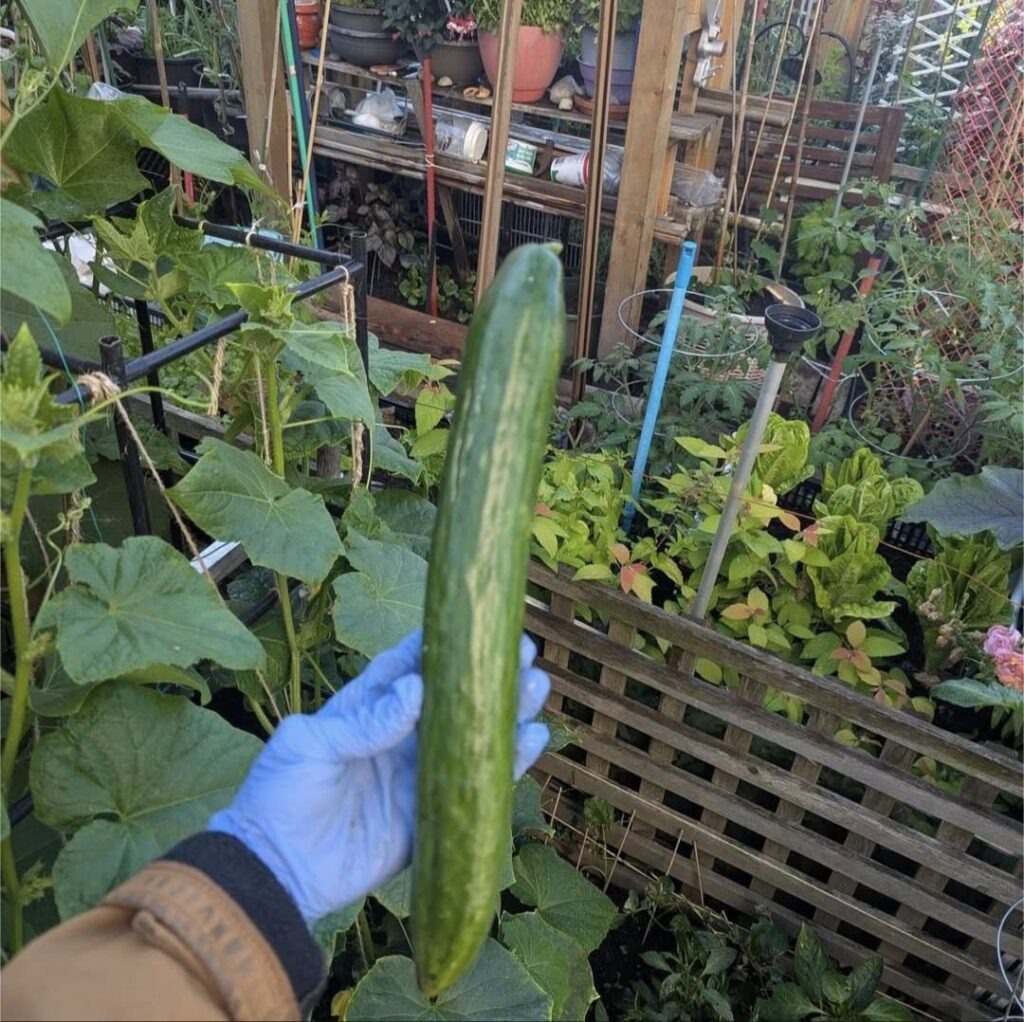
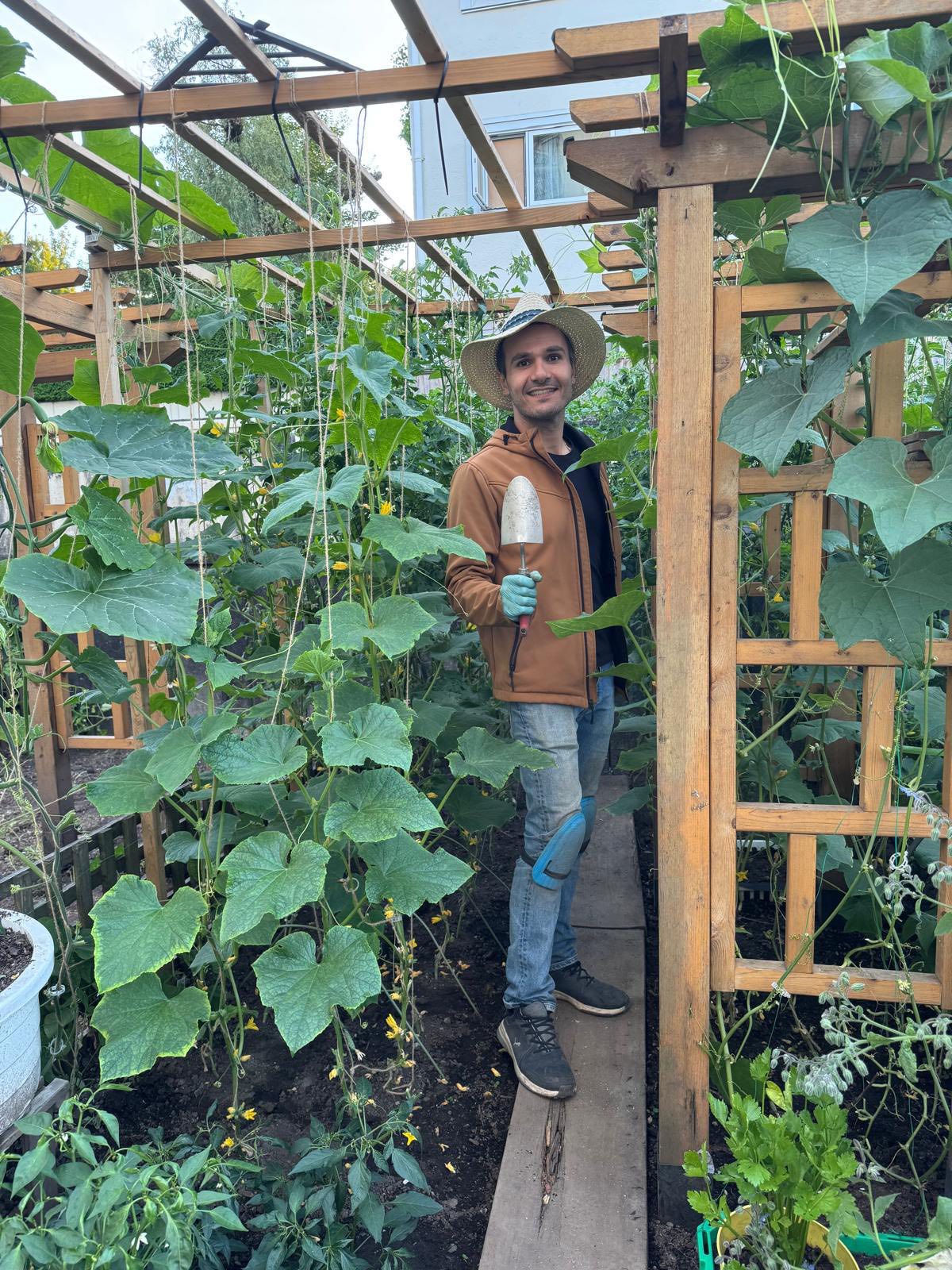
Cucumbers are often treated as a single-season crop. In Vancouver, they don’t have to be.
What follows is based on my own experience growing cucumbers in Vancouver over several seasons not controlled research.
 The goal is not to maximize production, but to stabilize yields across a short and variable growing season.
 Timing: Two Plantings, With Realistic Windows
In Vancouver, the growing season is short, but not fixed.
In my own growing:
First planting (transplants or protected start): mid-May to early June
(mid-May requires frost protection)
Second planting: early to mid-July
(late July possible, but with increased risk of reduced yield due to lower temperatures and reduced daylight in early fall)
 Typical pattern:
First harvest: late July to August
Second harvest: late August to September (often reduced in early fall)
Even when the second planting produces less, it spreads risk across the season instead of depending on a single crop cycle.
Yield Cycles: Harvesting vs Replacing
 Cucumber plants follow a predictable pattern:
Early stage → high production
Later stage → gradual decline
Regular harvesting helps maintain production within a single cycle, but it does not prevent eventual decline.
 This leads to a practical decision:
Continue harvesting to extend the plant
Or replace it to restore early-stage productivity
 In my experience, replacing declining plants produces more reliable late-season results than extending aging ones.
Also, allowing fruit to fully mature for seed production accelerates the decline of the plant.
Starting Early: Microclimate Without Transplant Shock
Early growth in Vancouver is limited more by temperature than by calendar date.
Small environmental changes can make a measurable difference:
 A south-facing wall, wooden fence, or temporary windbreak can raise local temperature by ~1–2°C (occasionally up to ~3°C in sunny, calm conditions), which can shift early growth by up to ~2 weeks.
This approach has one key advantage over greenhouse-grown seedlings:
plants develop directly in outdoor conditions and do not experience transplant shock or re-adaptation to temperature.
At the same time, both methods remain valid:
If you start seeds indoors, transplant carefully after hardening off.
The microclimate method avoids transplant shock, but requires soil temperature above ~15°C for reliable germination.
 Soil and Germination Reality
Below ~15°C, germination is unreliable and seeds may rot in wet soil.
Reliable germination begins around ~18°C, with faster emergence closer to ~20°C.
In heavier soils common in parts of Vancouver, planting on small mounds or raised rows can improve drainage and reduce the risk of seed loss in cool, wet conditions.
Plant Health: Airflow, Water, and Nutrient Balance
Cucumbers in Vancouver are highly affected by humidity and late-season disease pressure.
Airflow is not optional—it directly affects plant survival.
 Structure and pruning:
Remove lower leaves up to ~30 cm from soil
Thin dense inner growth to allow air movement
Train plants vertically (trellis, mesh, or strings)
These steps reduce moisture retention around leaves and slow the spread of fungal disease, especially powdery mildew.
Selecting varieties with resistance to powdery mildew can further improve performance in Vancouver’s late-season conditions.
Water (late-season critical):
Water early in the morning
Avoid wet leaves going into cool nights
Maintain consistent soil moisture (avoid dry → saturated cycles)
In Vancouver, late summer and early fall conditions increase overnight humidity, making leaf dryness before nightfall essential.
 Nutrients:
Cucumbers respond well to nitrogen in early growth.
Use only fully composted manure (fresh manure, especially poultry or horse manure, can damage roots).
Excess nitrogen late season promotes leaf growth at the expense of fruit.
 Slugs: Managing the Condition
Slugs are part of the growing environment in Vancouver.
Observed pattern:
Seedlings under ~10 cm are vulnerable
Mature cucumber stems are rarely affected
From experience:
Beer traps can attract additional slugs into the area
Slugs adapt to deterrents over time
Practical approach:
Keep soil surface clean and relatively dry
Remove lower leaves
Avoid dense, wet shelter zones
Wood-based mulch helps retain moisture but does not prevent slug movement.
Keeping mulch slightly away from plant bases reduces risk.
Seed Saving: Method and Humidity Control
Different cucumber types mature seeds differently:
Burpless types: seeds mature relatively quickly, but still require time on the vine to fully develop
Pickling types: must fully mature on the vine
Maturity indicators:
Skin turns yellow to orange
Fruit softens
Stem connection begins to dry
Seed preparation:
Allow fruit to soften further after harvest
Extract seeds and wash off pulp (pulp can inhibit germination)
Optional: ferment seeds in water for 24–48 hours
(keep container out of direct sunlight; a thin surface mold layer is normal)
Drying:
Use mesh, wax paper, or another non-stick surface
Avoid paper towels (they can stick to seeds as they dry)
Storage (in Vancouver’s humid climate):
Airtight container
Add paper to absorb internal moisture
Store in a cool, stable place
In my experience, seeds remained viable for up to ~5 years.
 Pollination and Late-Season Limits
Cucumbers require pollination unless using parthenocarpic varieties.
In Vancouver:
Pollinator activity decreases in late summer
Cool nights reduce fruit set
For second planting:
Open-field varieties may produce less
Hand pollination can improve results
Basic method:
Do it in the morning when flowers are fully open
Transfer pollen from the male flower (no small fruit behind it)
to the female flower (with a swollen base)
Parthenocarpic varieties can improve consistency: (e.g., ‘Suyo Long’, ‘Tasty Green’, ‘Diva’, ‘Parthenon 68’)
Conclusion
Growing cucumbers twice in Vancouver is possible—but conditional.
It depends on three practical decisions:
Replacing plants when yield declines
Creating small temperature advantages early in the season
Maintaining airflow and plant structure to reduce disease pressure
The outcome depends on measuring conditions such as soil temperature, moisture, and pollinator activity, rather than relying on a fixed calendar.
A simple soil thermometer alone can prevent most early-season mistakes.
References below photos
 &
&
 VMG Student Ted Miller