The warm days of July seem to bring out the best array of hydrangeas: white, cream, pale pink, deep pink, light and dark blue, and light and dark purple. So many colours!
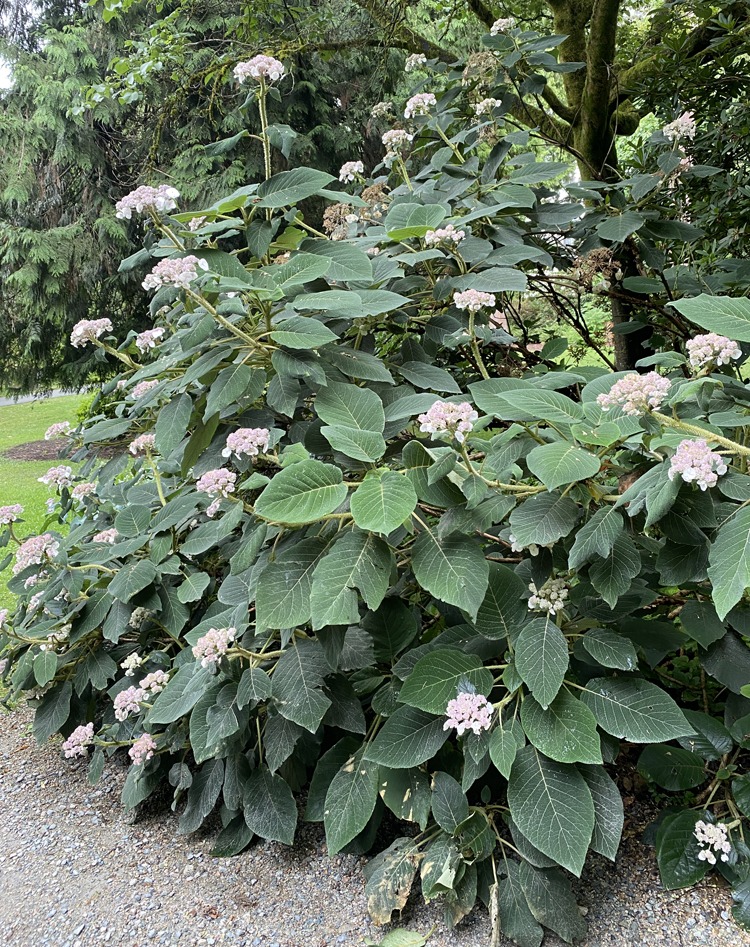
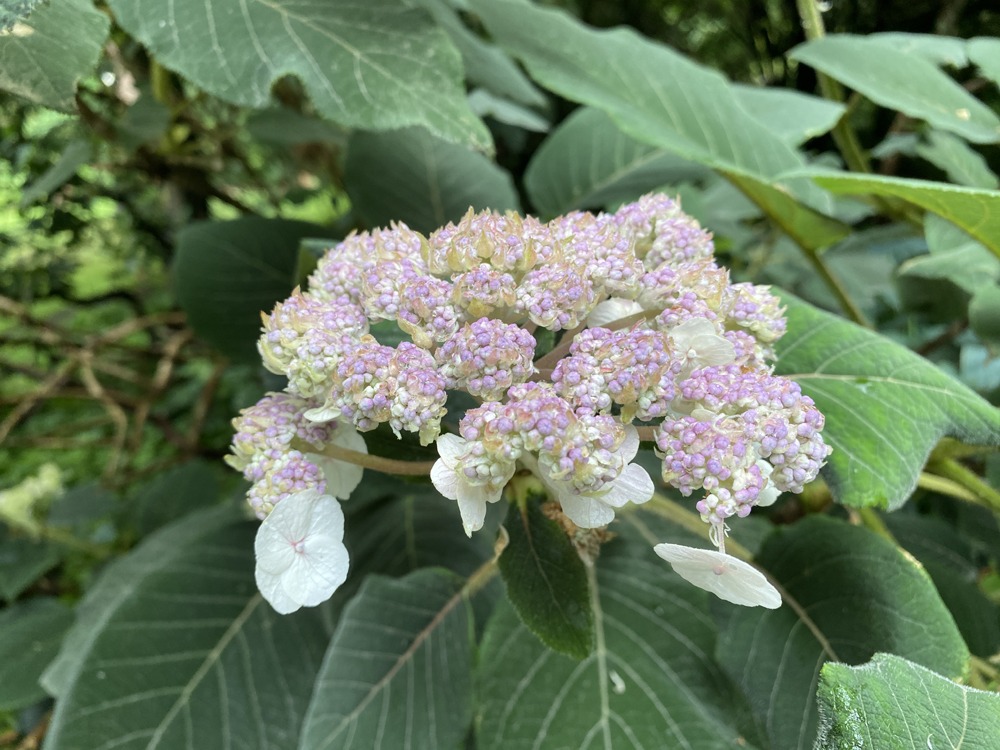
In Stanley Park, a shrub of Hydrangea aspera grows beside a path, under some tall trees. Commonly known as rough-leaved hydrangea, its leaves are rough and hairy, and its blossoms are pale pink and rounded.
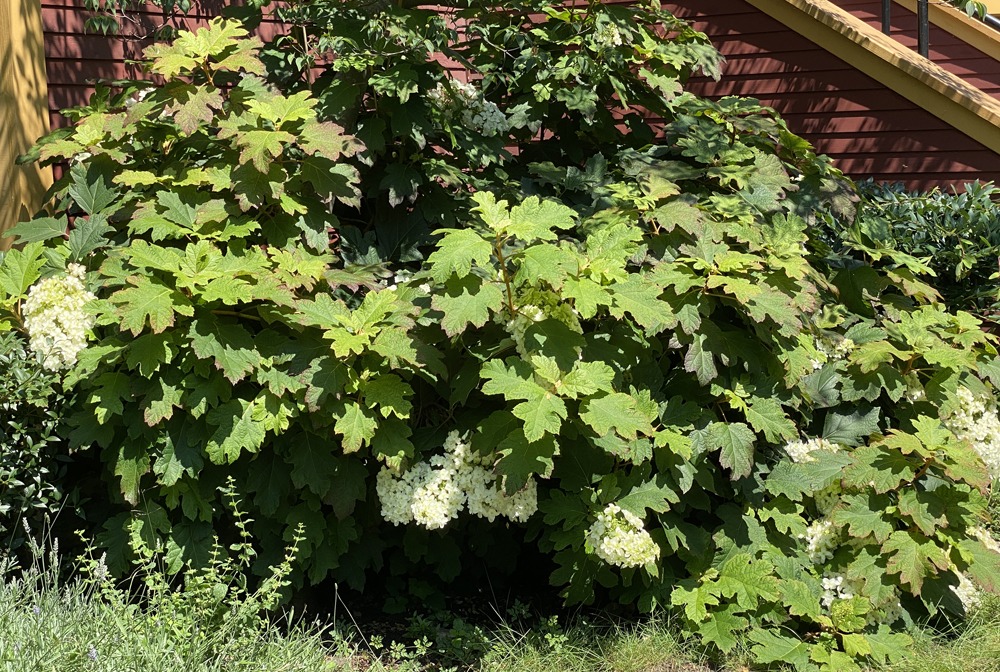
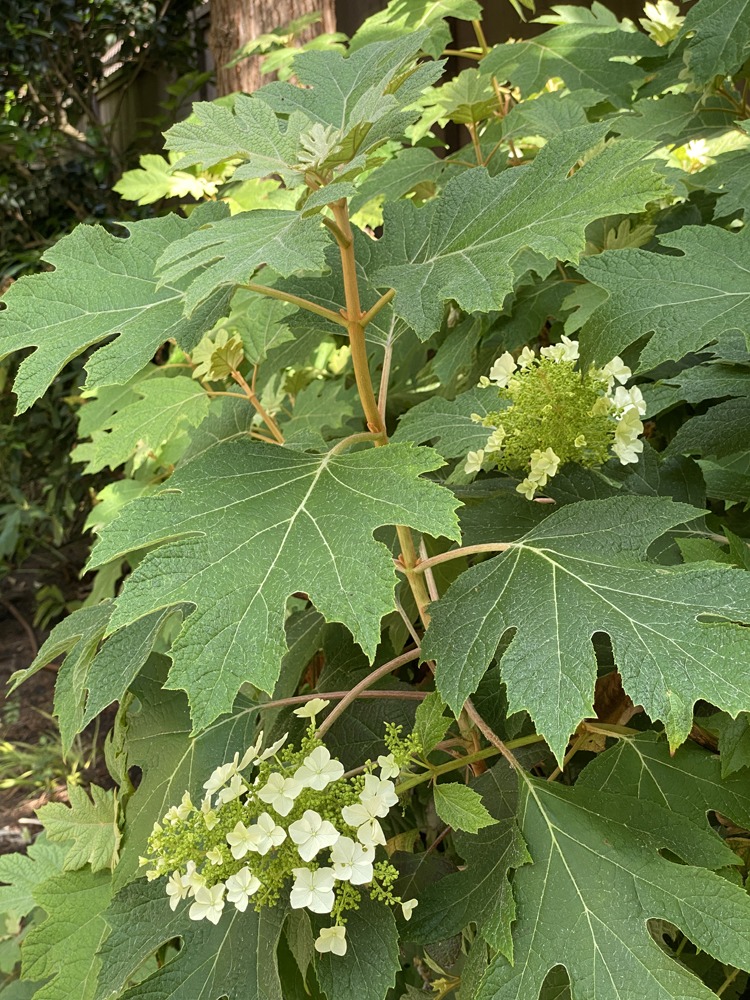
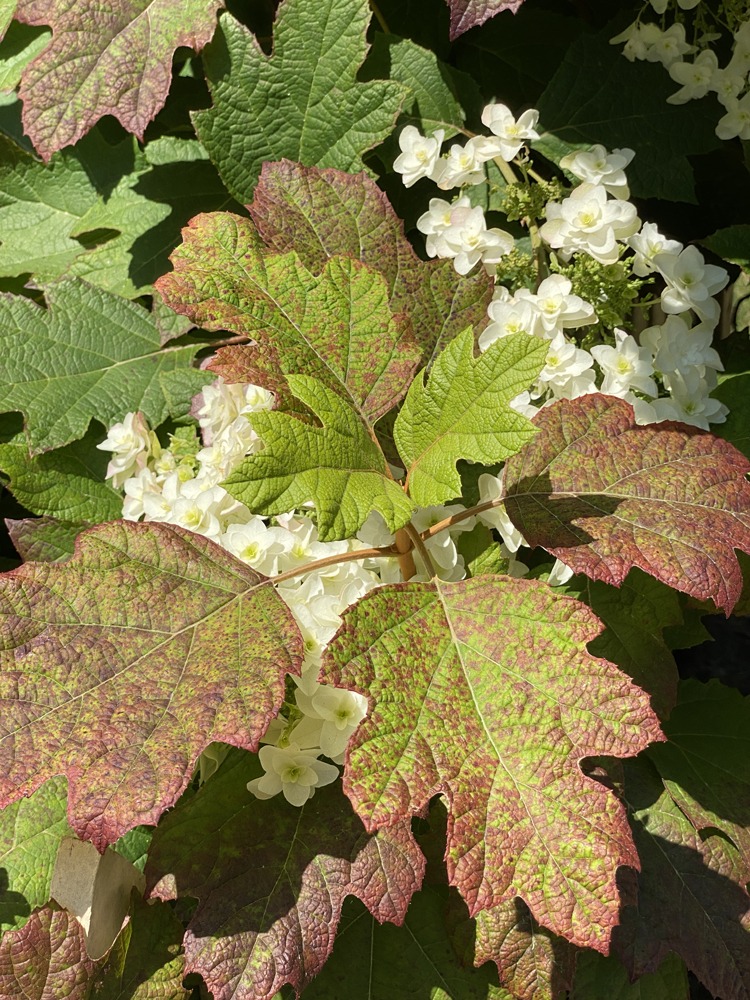
Another species is Hydrangea quercifolia, oakleaf hydrangea. Look closely at the leaves and, sure enough, they look rather like large versions of Quercus rubra leaves. The inflorescene is considerably longer than the usual length of a hydrangea flower. And the leaf colour turns beautiful colours (as is evident in one of the images) even in July. These photos are of oakleaf hydrangeas in various places in the West End of Vancouver.
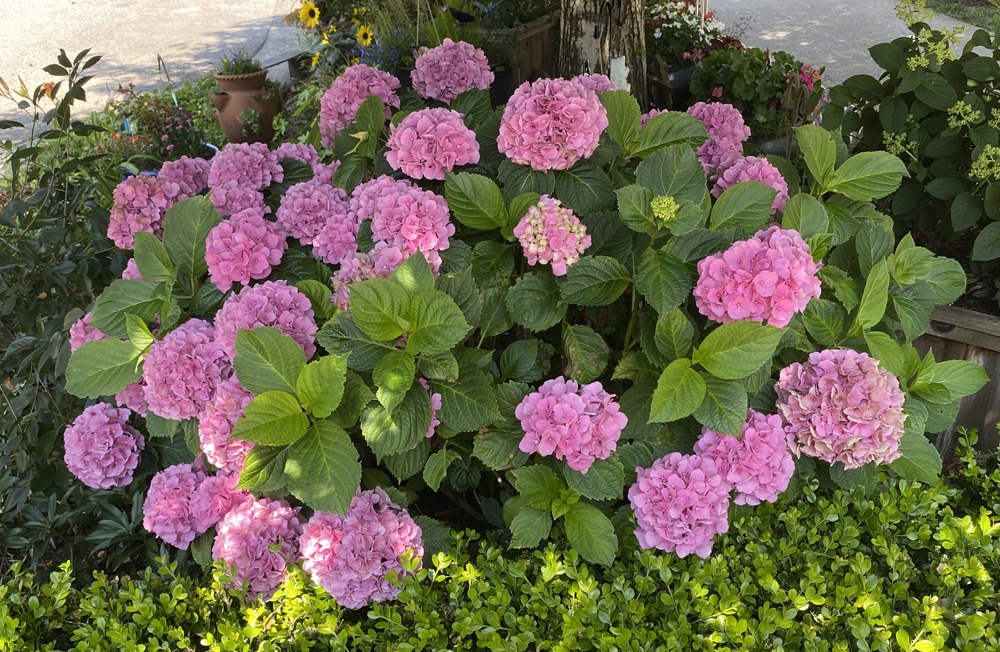
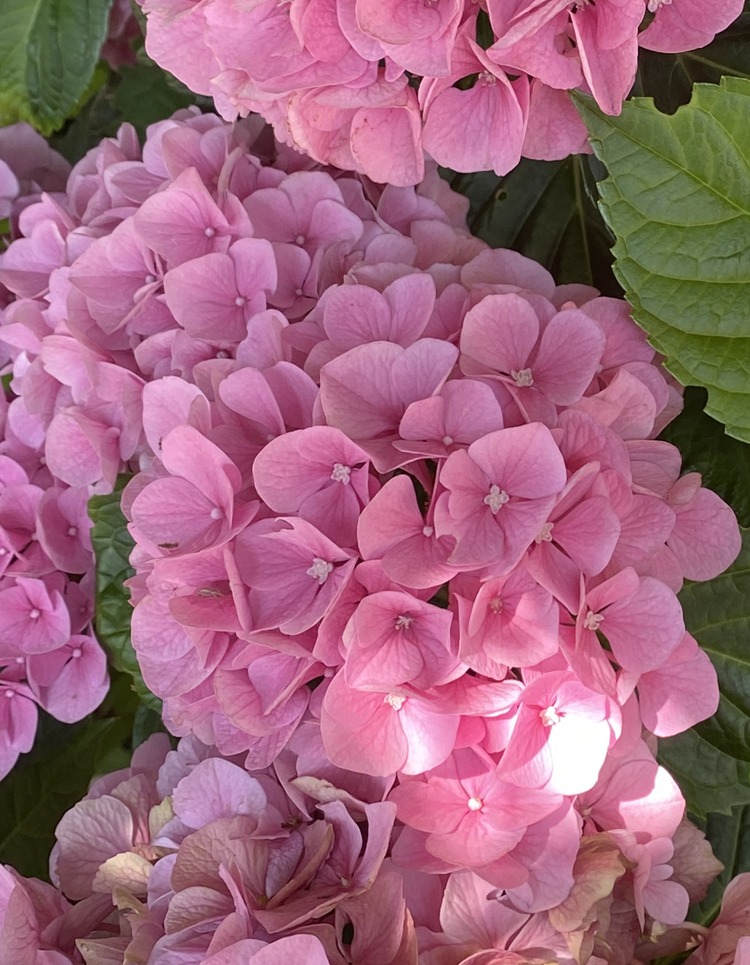
Next come the mophead hydrangeas in reds, pinks, white, blues, and purple. These are bigleaf hydrangeas, Hydrangea macrophylla.
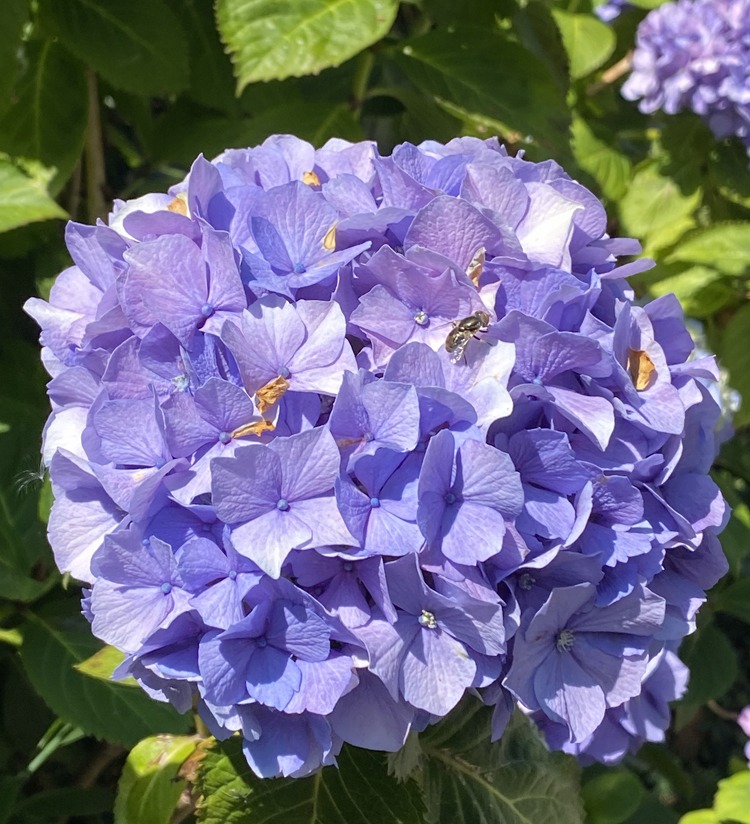
The lacecap hydrangeas, also Hydrangea macrophylla, have a different style of flower. The next images shows the difference.
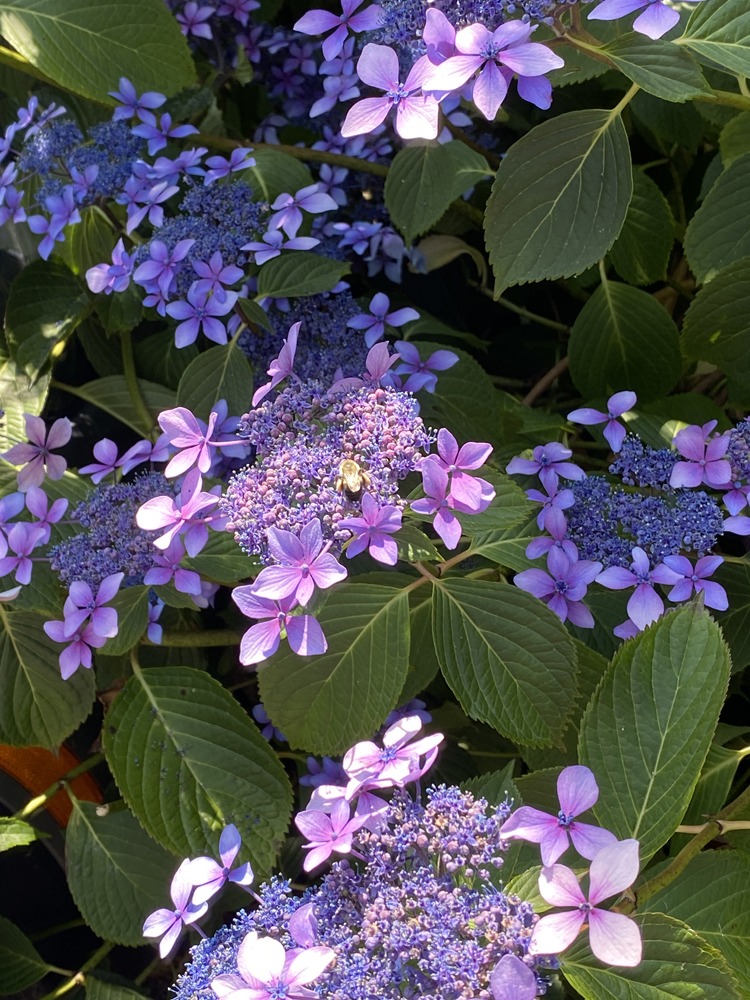
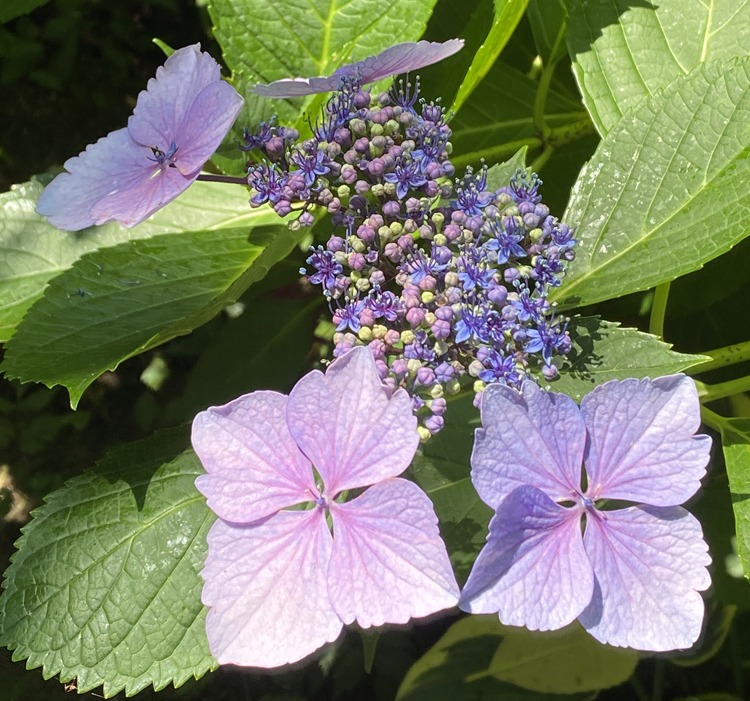
In the garden where I grew up, it was still the belief that adding one or two nails to the soil would change its pH. That’s now a myth. Pink petals appear when roots are in basic soil; blue petals appear from acidic soil. So it seems there is a mixture in the plant featured above.
Of course, there are many other species of hydrangea, for instance, climbing hydrangea, smooth hydrangea, and panicle hydrangea, and many cultivars too. Altogether, it is a very dependable genus with large inflorescences lasting a long time, as long as the shrubs have sufficient water, after all, hydrangea means “water vessel.” Remember to water around the plant rather than “at” it.