
- My cucumbers are misshapen. What is wrong?
- Why isn’t my wisteria blooming?
- I have a plum tree that has not produced fruit in the seven years I have had it. Why? What should I do with it?
- My orchid is sending out grey coloured shoots. What are they? Can I cut them off?
- How do I remove bindweed (morning glory)?
- Do gooseberry plants require male and female plants to produce fruit?
Q. My cucumbers are misshapen. What is wrong?
I would be interested to know how your cucumbers are grown, in the ground or in a pot, and
how the vine has been supported as it develops. An unsupported cucumber plant trailing on the
ground is much more likely to have misshapen fruit and a lower crop yield.
So, a suggestion for future years would be to plant in a pot about 12” to 14” across, which can be placed on the
ground, and the vine supported with a tripod trellis. Getting the plant off the ground helps to
avoid any garden pests, and also makes it much easier to see the new fruit emerging and to pick
when you see an individual cucumber is ripe. A proper support is also necessary so that the
emerging cucumber fruit is not trapped against the support itself or the leaves and stems of the
plant trailing on the ground.
Temperature stress variations with extreme heat or a cold snap reduce pollination and interrupt
plant function. When pollen transfer between male and female flowers is incomplete this can
cause malformed fruit. Attracting pollinators such as bees to your garden will help, so plant
flowers nearby to your vegetable garden. Dedicated gardeners are known to hand pollinate their
cucumber vines using a small brush to transfer the pollen between the emergent flowers. You can
try this method of course, but I often think that bees do a better job as they get lots of practice.
When there are periods of extreme heat it is best to shade the cucumber plants during the day and
remove the coverings at night. Using a black or green shade cloth available at garden centres,
will help reduce the impact of hot day-long sun. Also planting tall ‘companion plants’ such as
pole beans on the west side of the cucumber plants will help to provide shade.
Continue watering throughout the growing period on a regular basis as Irregular watering
between dry soil and heavy watering causes uneven fruit formation and growth. Spreading about
a 2-inch deep sprinkle of mulch at the base of the plant will help to prevent rapid drying in very
hot summers. As cucumbers have a very high-water content watch for wrinkled skin on the fruit
which is a sign of water loss and correct your watering schedule to ensure the plants are
consistently moist but not sodden.
Lack of nutrients also leads to misshapen fruit. I have successfully used a tomato stake in the
cucumber pot. This is a pre-measured, slow-release compact blend of major nutrients like
nitrogen, phosphorus, and potassium (NPK), plus vital secondary minerals like calcium and
magnesium. It is an overall fertilizer intended to support leafy growth, strong root systems, aid in
fruit development and ripening, and helps to prevent blossom rot and malformed fruit. The stake
feeds directly to the roots and breaks down over the life of the plant as it is being watered.
It is just fine to eat a misshapen cucumber but avoid those fruits that are soft or slimy which
indicates rot and cucumbers which show signs of mold. Yellow skin spots mean the cucumber is
overripe so the fruit will be softer inside and less tasty.
Sources
https://www.gardeningknowhow.com/edible/vegetables/cucumber/deformed-cucumbers.htm
https://www.thespruce.com/companion-plants-for-cucumbers-2540044
What’s Wrong with My Vegetable Garden? David Deardorff & Kathryn Wadswoth, Timber Press
Inc., 2011, pages 54 to 55 & 149 to 156.
https://www.dreamstime.com/photos-images/deformed-cucumber.html
Q. Why isn’t my wisteria blooming?
Although a very robust vine, there are many reasons why wisteria does not flower well. A newly
planted wisteria vine often takes some time to mature and establish. Nursery plants grown from
cuttings or grafted varieties usually flower somewhere between 3 to 7 years. If they are more
mature when purchased, grafted specimens usually flower sooner rather than later, some plants
as early as 1 to 2 years. However, if your vine was planted from seed rather than a grafted or
cuttings grown plant, it may take many years to bloom or never bloom at all.
Wisteria vines love the sun, the more hours of sunshine the better. This means at least 6 hours of
direct sunlight each day. In dry summer months young plants appreciate evenly moist soil while
mature plants will tolerate drought but appreciate a deep weekly soaking. A thick layer of
organic mulch at the root zone will help to retain moisture. Avoid poor soil drainage and amend
with mulch as required.
Most importantly, your vine may be missing the correct twice-a-year pruning routine. Pruning
controls both wild growth and boosts flower production. In July or August cut back those long
green summer whippy shoots to about 7 leaves or buds. In February when you can see the shape
of the bare runners, trim them again to 2 or 3 buds and secure them on the support with some
space between each. This allows for maximum daily sun exposure as the weather warms up.
Make sure your wisteria is properly supported. A good, heavy trellis or pergola is necessary for
in time, the trunk can be as thick as some small tree trunks. The trellis must carry the vine’s
weight, allow you to spread out the long trailing shoots, and must be safely reached for pruning.
Attach the vine to your support in the direction it wants to grow: Chinese wisteria (Wisteria
sinensis) naturally grows in an anticlockwise direction and Japanese wisteria (Wisteria
floribunda) naturally grows in clockwise direction. You cannot over prune a wisteria as is both
tough and vigorous and can be cut back down to achieve a renewed structural framework or if
maintenance needs to be carried out on the structure supporting the plant.
Too much nitrogen fertilizer encourages green growth. A monthly application of high-
phosphorus and high-potash fertilizer such as a 5-10-10 formula, bone meal, or liquid tomato
feed in early spring, will encourage more flowers to bloom. Avoid fertilization if you have
undertaken a very hard prune in the spring.
Sources
https://www.gardenersworld.com/how-to/grow-plants/how-to-grow-wisteria/
https://www.rhs.org.uk/plants/wisteria/pruning-guide
https://www.rhs.org.uk/plants/wisteria/frequently-asked-questions
https://www.gardenia.net/guide/how-to-choose-the-right-wisteria
Q. I have a plum tree that has not produced fruit in the seven years I have had it. Why? What should I do
with it?
There can be many reasons associated with the lack of fruit development on plum trees. Most edible
cultivars typically begin bearing fruit by age seven. Let’s first explore plum tree identification and
pollination requirements and then cover common reasons for the lack of fruit, and solutions to
encourage fruit development.
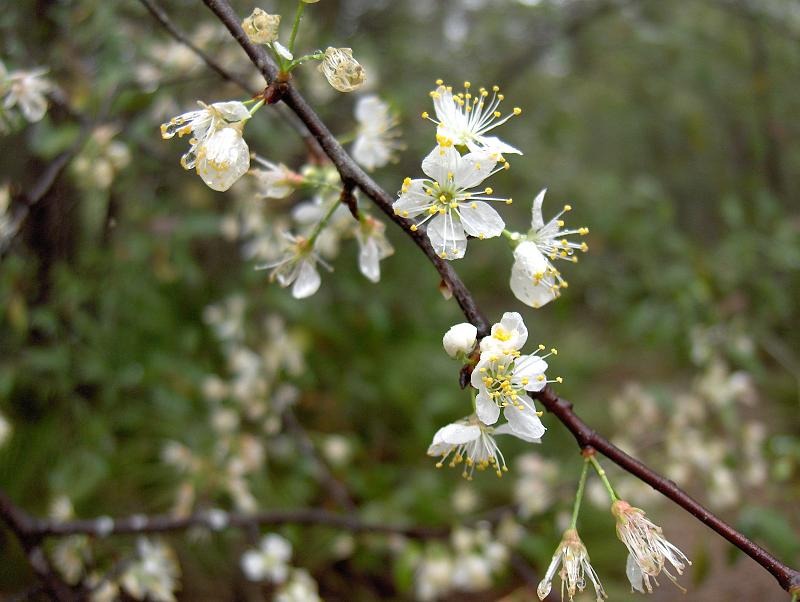
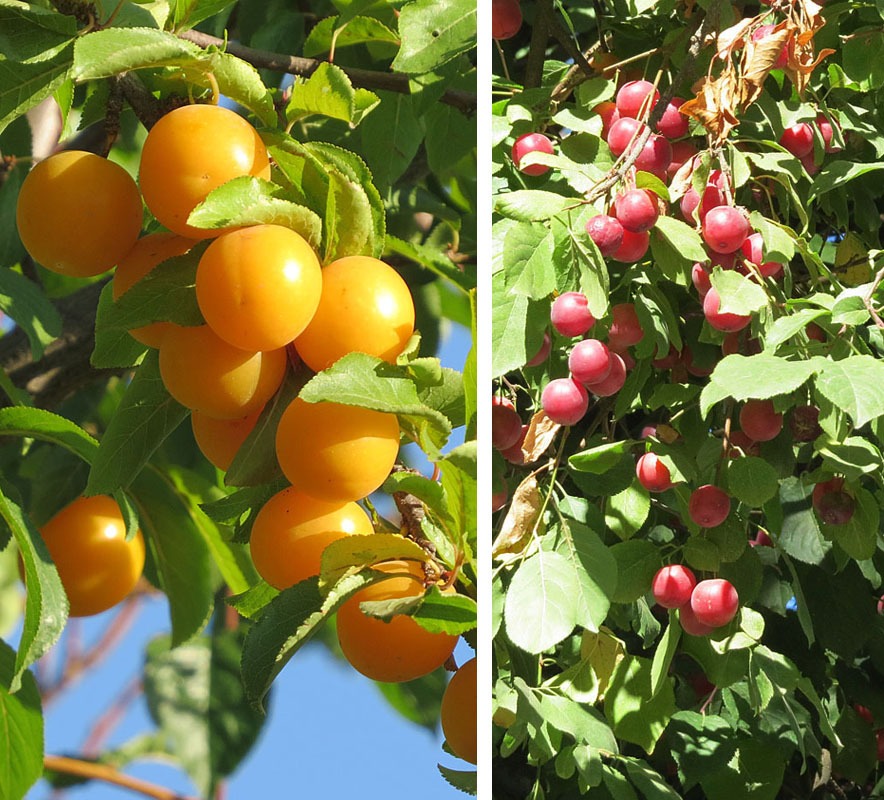
The first step is tree identification as pollination requirements vary among plum trees. There are three
main groups of plum trees grown for edible fruit: European (Prunus domestica), Japanese (Prunus
salicina) and native wild plums and wild hybrid crosses. Native wild plums include American (Prunus
americana) and Canadian (Prunus nigra) plum trees. There are many plum tree varieties and it may be
difficult to identify your existing tree. Below are some general descriptions of the leaf and bloom
characteristics of European, Japanese and wild plum trees.
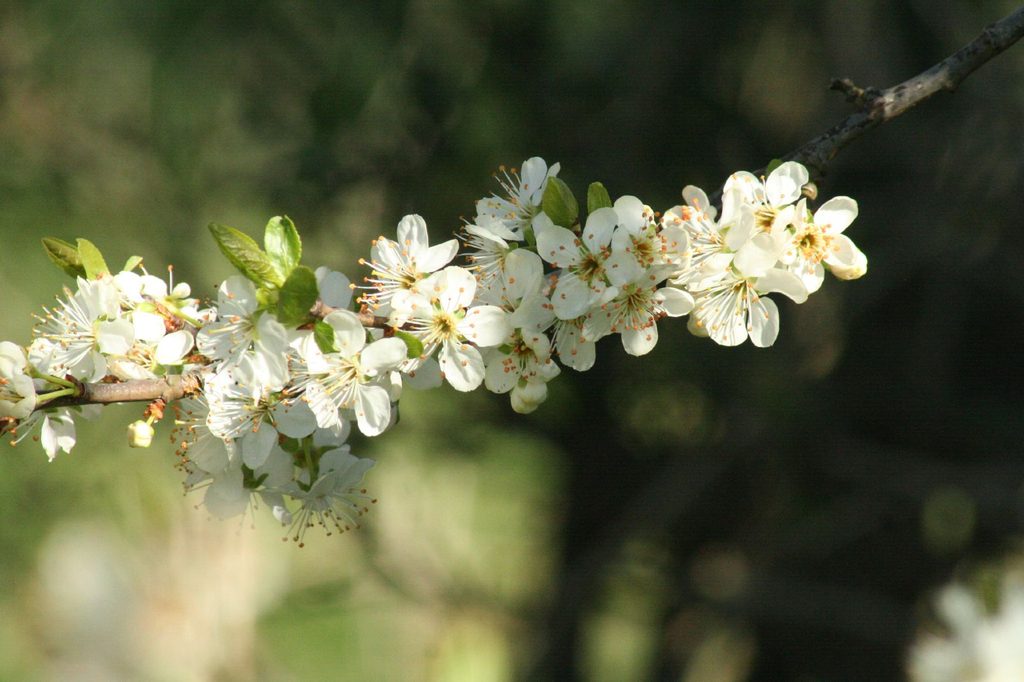
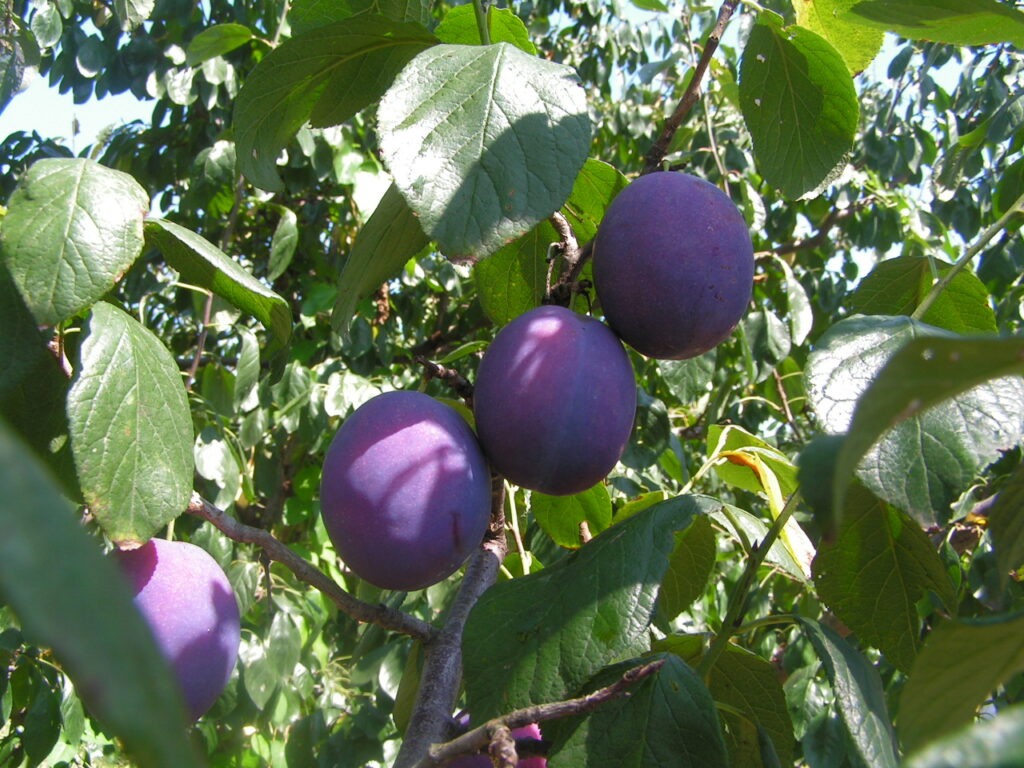
European plum trees have thick, dull green, finely serrated leaves with soft fine hairs on the underside.
The large creamy white flowers appear singly or in pairs before the leaves unfold and have a heavy
honeyed scent.
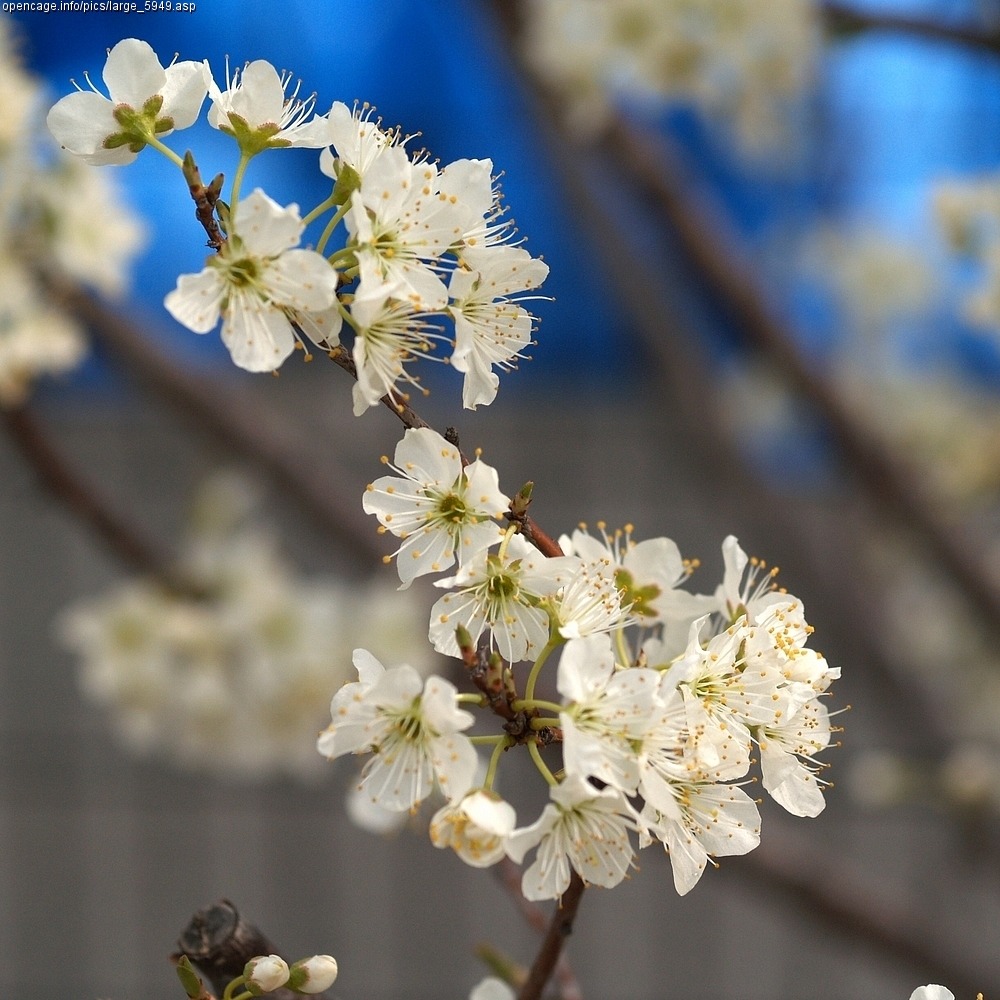
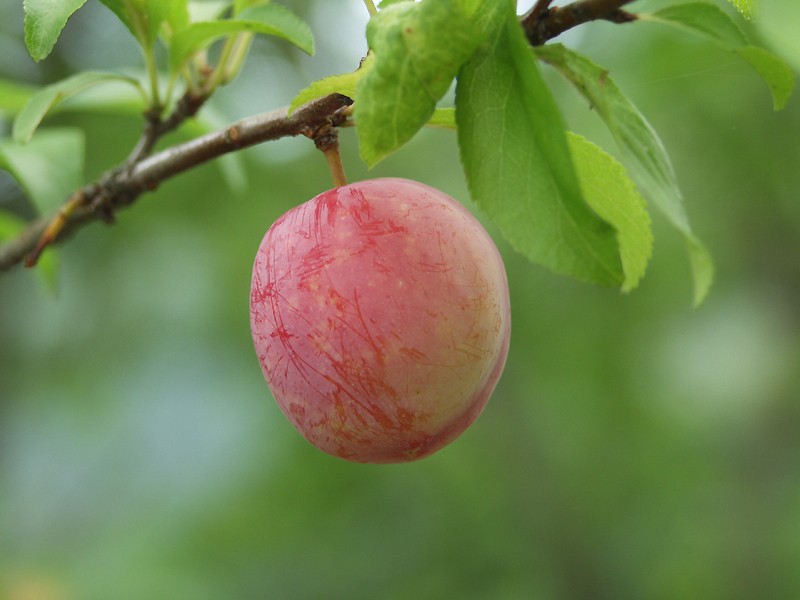
Japanese plum trees have long, narrow, smooth bright green leaves with sharp finely toothed edges.
The small pure white flowers appear in large clusters before the leaves unfold and have a light, fresh
fruity scent.
Wild plums and hybrid trees commonly have leaves that are rough, broad, oval, sharply tapered at the
tip, with toothed edges. The flowers are off-white to snow-white appearing in small clusters with a
strong, musk-like scent.
Once the plum tree is identified, pollination requirements can be determined. Plum tree pollination is
complex and a good approach to increasing opportunities for pollination and fruit yield is to add one
more plum tree of the correct variety that flowers at the same time as your existing plum tree. Some
plum trees are described as self-fertile, meaning they can produce fruit on their own. While self-fertile
trees do not require a second compatible plum tree to provide pollen, they will bear more fruit with a
second tree. Plum trees that are not self-fertile depend on a pollinizer, or a second tree that provides
pollen, in order to bear fruit.
European plum varieties that are self-fertile include Blue Damson, Green Gage, Italian Prune, Stanley,
and Yellow Egg. The European plum Seneca is an exception as it requires another European plum tree as
a pollinizer. Japanese plum varieties that are self-fertile include Santa Rosa and Methley (hybrid), while
Satsuma is partially self-fertile and produces more fruit with another Japanese plum pollinizer. European
and Japanese plums cannot cross-pollinate.
Native wild plums and wild plum hybrid crosses require more than one tree to develop a substantial
fruit crop. Wild plum tree varieties can pollinate other wild plum varieties, hybrid plum varieties, and
Japanese plum varieties as long as the bloom time is the same. Hybrid varieties generally cannot
pollinate wild plum trees or other hybrid plum trees. Some wild hybrid plum trees are a cross between
wild plum varieties and Japanese varieties. There are many wild hybrid varieties, including Shiro, Toka,
and Pembina.
Pollination of flowers also relies on early spring pollinators. For example, Japanese plums bloom first in
late February or early March when pollinators are waking up and looking for a meal. Two ways to
increase pollinators include adding mason bee houses and mason bees to your garden or yard, and
adding late winter or early spring blooming plants such as winter heaths (Erica spp), Lily-of-the-Valley
shrub (Pieris spp), flowering current (Ribes spp), and evergreen huckleberry (Vaccinum ovatum). These
plants are a wonderful invitation to pollinators to stick around and enjoy the feast.
In addition to pollination requirements, there are several other common reasons for a lack of fruit to
include: less than 6-8 hours of direct sunlight, improper or untimed pruning, an imbalance of nutrients,
and weather-related reasons. Over time, our yards and gardens may experience less direct sunlight as
trees and hedges grow nearby. Observe the plum tree and confirm that it is getting 6-8 hours of direct
sunlight as this is essential for fruit development.
Do you see spurs and bud swells on your tree? Plums fruit at the base of one year old shoots and along
the length of two year and older stems. Plum spurs from which fruit appears are short, stubby clusters
of buds found on lateral branches. Pruning in the spring or midsummer is best for controlling the size
and encouraging branches that can support fruit. Overpruning or pruning at the wrong time can lead to
excess removal of spurs and/or a stress response that results in vegetative growth only. Avoid pruning in
the winter when silver-leaf disease and cankers can spread. There are a lot of resources on pruning
online and trained horticulturalists that can support you as well. First, I recommend looking in the spring
to see if you can identify spurs and bud swells. See dormant and bud swell images here.
Nutrient imbalances include excess nitrogen, sometimes occurring nearby by fertilizing lawns or other
plants. Excess nitrogen promotes leaf over blossom development. As well, the lack of phosphorus
prohibits blossom development. Before adding specific nutrients, it is advantageous to test your soil. As
well, adding organic matter to the area in the early spring can provide a diverse mix of macro and micro
nutrients. It is also important to remove weeds that may be competing for nutrients from around the
base of the tree. They like to creep in and grab the nutrients and water.
Weather related reasons also impact fruit development and can include unusually mild winters that do
not provide adequate chill hours, plunging spring temperatures damaging buds, or heavy wind and rain
during key pollination times. Chill hours are a defined number of hours below 7.2c that regulate
dormancy and proper breaking of buds. Typically, the Greater Victoria area has sufficient chill hours for
many plum tree varieties. However, as we experience warmer winters, this may change.
As well, frost damage can also occur in the spring if we experience unseasonably warm weather that
encourages bud and bloom development followed by abrupt downward plunging temperatures that
damage plant tissue. Heavy wind and rain during a pollination period can also impact pollinator activity.
In 2025-2026, the Greater Victoria area experienced a warmer winter than usual with fewer chill hours
and a heavy rainfall in the early spring during pollination timeframes. The weather has a significant
impact on tree fruit development and keeping track of it can aid in troubleshooting issues at a later
date.
There can be other reasons for the lack of fruit and it can be helpful to observe the growth of the tree;
overall health of the bark, stems, leaves and flowers; and surrounding conditions. Plum trees are
susceptible to pests and diseases such as silver leaf disease, black knot, brown rot, and aphids. Pests and
diseases can stress a tree and discourage growth and development of fruit. Birds may also be nibbling
the swelling buds in late winter and early spring, making observation beneficial at this time.
In summary, plum trees typically bear fruit by age seven and there can be many reasons for the lack of
fruit that can be remedied. Once the tree pollination requirements have been met by identifying your
current tree and possibly adding a second tree, consider planting early spring blooming flowers, testing
the soil for nutrients, amending the soil in the spring with organic matter, clearing the area around the
tree, and pruning for fruit development. Observing the tree and the weather in late winter and early
spring can reveal a lot about fruit development. We cannot control the changing climate and weather,
however keeping track of it helps us troubleshoot fruit yield issues. While they have a few key
requirements, plum trees are among the oldest cultivated fruit trees for a reason, offering us delicious
and nutritious food.
Sources
Brickell, C., Joyce, D. (2025) Pruning and Training: What, when, and how to prune, DK publishing
Miller, J., Grow Wild Plums the Easy Way, Mother Earth News, June/July 2026, p 48-49
https://ipm.ucanr.edu/home-and-landscape/cultural-tips-for-growing-plum-and-prune/#gsc.tab=0
https://dinternursery.ca/gardening-resources/fruit-tree-pollination
https://storymaps.arcgis.com/stories/91c9e543b80e49b4905516f7ebf1ac87
https://www.bctfpg.ca/horticulture/varieties-and-pollination/prune-and-plum-varieties/
https://extension.psu.edu/home-orchards-why-is-there-no-fruit-on-my-tree
https://www.canr.msu.edu/news/assessing_frost_and_freeze_damage_to_flowers_and_buds_of_fruit_
trees
https://pacifichorticulture.org/articles/a-currant-affair/
https://www.rhs.org.uk/fruit/plums/pruning
https://plants.ces.ncsu.edu/plants/prunus-domestica/
https://plants.ces.ncsu.edu/plants/prunus-salicina/
Q. My orchid is sending out grey coloured shoots. What are they? Can I cut them off?
Approximately 70 percent of all orchids are epiphytes, plants that grow on other plants. Orchids
commonly sold for home use are epiphytic orchids. Typically, these orchids have prominent, succulen
stems called pseudobulbs and aerial roots that grow above ground. These roots can be grey and they
serve an important purpose, so it is not advisable to cut them off the plant. need acidic soil but if an acidic soil mix is not available you might wish to add a small amount of acidic fertilizer or sulphur because they will be very unhappy and unproductive if the pH is too high. A pH of about 5 is what’s needed.
Approximately 70 percent of all orchids are epiphytes, plants that grow on other plants. Orchids
commonly sold for home use are epiphytic orchids. Typically, these orchids have prominent, succulent
stems called pseudobulbs and aerial roots that grow above ground. These roots can be grey and they
serve an important purpose, so it is not advisable to cut them off the plant.
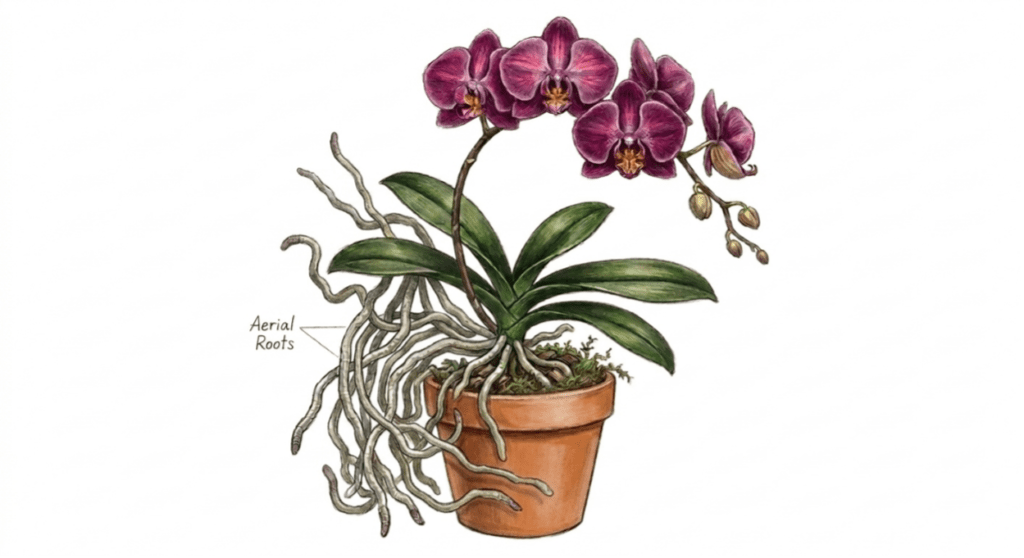
The older parts of the roots are covered with a velamen, a silvery-white layer of dead cells that have an
essential function. The purpose of velamen is water absorption, moisture storage, and root protection.
While they may be growing in all directions, reaching out of the pot, and appear generally disorganised,
cutting them off would harm the plant.
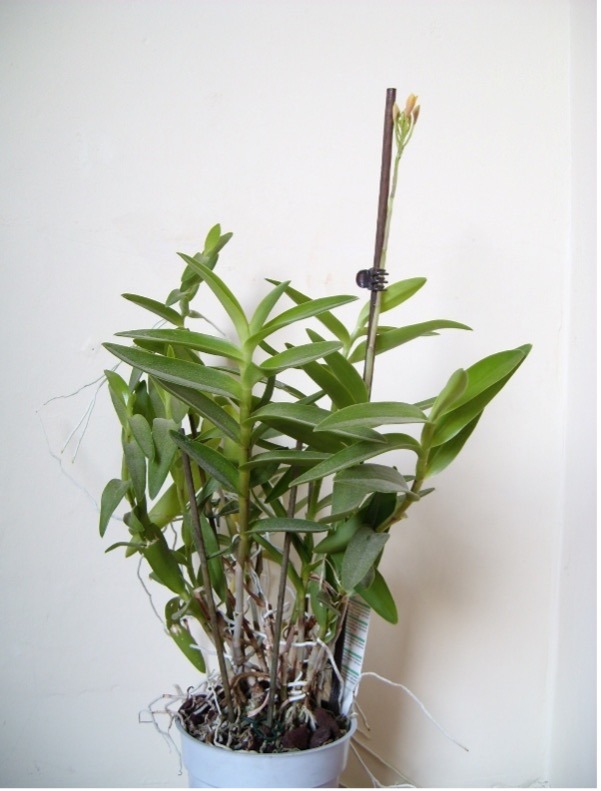
Healthy roots can be bright or dark green, silver, grey, white, or yellow. Unhealthy roots may be brown,
black, or paper-dry and flat. If the roots are decomposing, soft, brown or black, they can be removed
with a sterile knife or razor blade. The image below shows silvery-grey aerial roots reaching outside the
pot. Sometimes roots that are fully grey may indicate that the orchid is thirsty.
Sources
https://en.wikipedia.org/wiki/Orchid
https://www.bbg.org/article/orchids_and_how_they_grow
https://www.aos.org/orchids/orchid-roots
https://canadianorchidcongress.ca/cculture/roots.pdf
Q. How do I remove bindweed (morning glory)?
For starters, while commonly mistaken, bindweed (field bindweed: convolvulus arvensis or hedge
bindweed: Calystegia sepium) and common morning glory (ipomoea purpurea) are different plants.
Morning Glory (ipomoea purpurea) is an annual ornamental plant that completely dies back in winter.
However, due to its prolific self-seeding, it often returns with vigour. Field bindweed (also referred to as
perennial morning glory or creeping jenny) is native to Eurasia and is a hardy perennial that spreads
from a complex root system as well as from seed. Roots of the plant as short as 2 inches can form new
plants and the roots are able to spread down to depths of 14 feet. The extensive root system which can
extend up to 10 feet radially per single plant is able to overwinter once foliage dies off in winter. Field
Bindweed’s negative impact stems from both its vining qualities that wrap around other plants and can
smother them as well as competing for water, nutrients and sunlight.
Controlling Bindweed
Prevention
One of the best methods for controlling bindweed is prevention.
- When bringing in new seeds, plants, or soil, try to use reputable sources to avoid bringing bindweed into your garden.
- Because the seeds can be viable for up to 60 years, deadheading an existing plant before it goes to seed can significantly reduce the spread.
- Stay abreast of what is happening in your garden, control new infestations by weeding before they have a chance to become established.
- If you have an area already infested with bindweed avoid spreading it to other areas when weeding, mulching or transplanting or gifting plants.
Methods for Removal
- Working around existing plants, using a weeding fork, trowel or soil knife, insert to full depth and
remove as much of the plant and its root system as possible. - During the dormant season, lift all the existing plants in a garden bed that is infested with bindweed, remove as much of the bindweed’s root system as possible (including from the root balls of the plants that were lifted) and then replant existing plants.
- In areas without existing plants, smothering bindweed can be an option as long as the entire
area is completely blocked from light for up to 3 years and then the area is monitored for years after
that to manage any regrowth. Some options for blocking light include woven polypropylene and
cardboard (better for soil health because it lets through moisture and allows for gas exchange) or black
plastic (which will not let through water or allow for gas exchange). Ensure sections of material overlap
each other and are held down by something heavy such as rocks or mulch. - Where bindweed is found in turfgrass, regular mowing helps to weaken and eventually eliminate the plant.
- Shading an area that has bindweed by planting trees and shrubs has demonstrated some effectiveness in reducing its growth especially if the bindweed is not able to climb the plant.
Special Note: Avoid using a hoe or tiller to “chop” up the bindweed as this can both bring viable seeds to
the surface and the chopped-up root fragments can become individual plants further exacerbating the
infestation. If you are wanting to prevent bindweed from spreading outside of its current area, insert a
physical vertical barrier in the soil at least 18 inches deep.
Sources:
https://ipm.ucanr.edu/home-and-landscape/field-bindweed/#gsc.tab=0
https://www.rhs.org.uk/weeds/bindweed
https://www.oiso.ca/species/field-bindweed/
Q. Do gooseberry plants require male and female plants to produce fruit?
Gooseberry plants (European Gooseberry: Ribes grossularia) are self-fertile plants meaning that instead
of having specific male and female plants, they have male and female parts to each of their flowers.
Therefore, fruit can be provided having only a single Gooseberry plant. That being said, it has been
reported that greater yield may be noticed when flowers are cross pollinated by planting another plant
of a different variety nearby. Gooseberries fruit on 1 year old wood.
Sources
https://www.gov.mb.ca/agriculture/crops/crop-management/fruit-crops/gooseberry-production.html
https://www.rhs.org.uk/plants/15898/ribes-uva-crispa/details
https://www.rhs.org.uk/fruit/gooseberries/gooseberry-pruning-and-training
https://web.extension.illinois.edu/hortanswers/plantdetail.cfm?PlantID=485&PlantTypeID=10